Production delays do not always happen because of machine breakdowns or labour shortages. Sometimes, materials remain unattended, equipment is unavailable, or work-in-progress (WIP) products spend too much time waiting between production stages.
Without proper visibility, identifying where these delays occur can be difficult. Indoor positioning technology helps manufacturers understand how materials and resources move across the shopfloor. With a UWB Tracking System, businesses can access real-time location information and identify movement patterns that may indicate production bottlenecks.
What Is Indoor Location Tracking in Manufacturing?
Indoor location tracking helps businesses identify the positions of tagged equipment, materials, and other resources inside a facility where GPS may not provide reliable coverage.
Technologies such as Bluetooth Low Energy (BLE) and Ultra-Wideband (UWB) can support indoor positioning. UWB uses short radio pulses and timing measurements between tags and anchors to calculate locations with high precision when appropriately deployed. A UWB Tracking System uses this positioning data to provide better visibility into the location of tagged industrial resources.
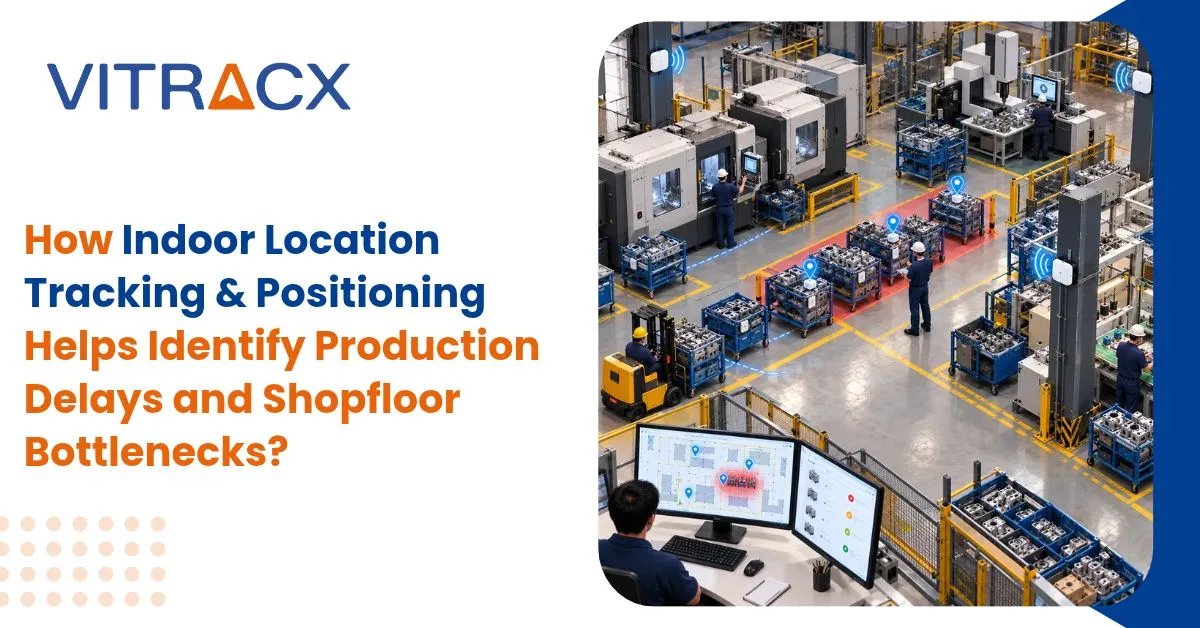
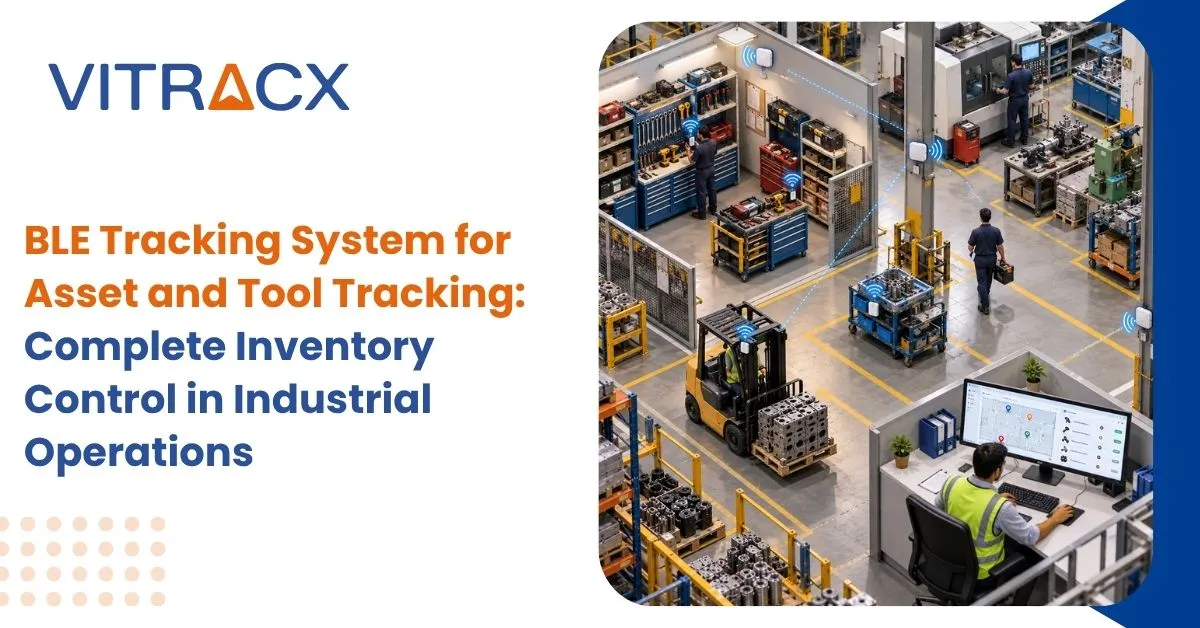
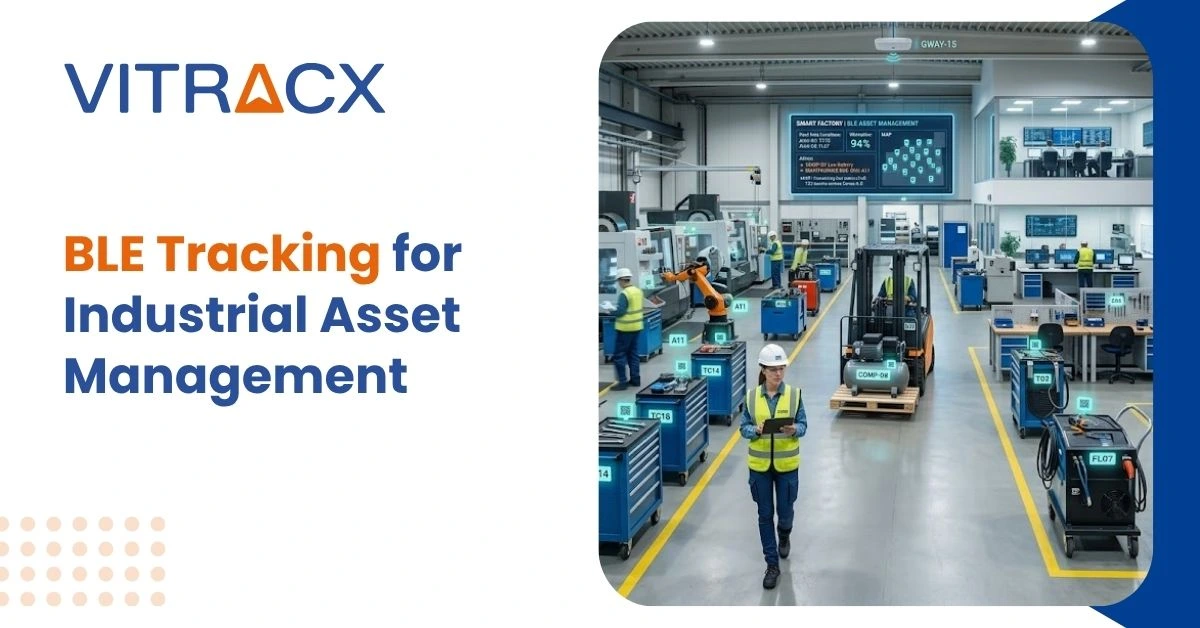
The collected information can be displayed on a digital floor map, allowing production teams to monitor asset locations, review movement history, and understand activity across different shopfloor areas.
How Indoor Positioning Helps Identify Production Delays?
Production delays often begin with small problems that go unnoticed. A trolley may be unavailable when needed, materials may remain at a workstation, or equipment may take longer than expected to reach another production area. Indoor positioning helps manufacturers identify these situations by showing where tagged resources are located and how they move across the shopfloor. A UWB Tracking System provides precise indoor location information that can help teams monitor these movements and investigate potential delays.
Tracking Material Movement Between Production Stages
Work-in-progress materials pass through several stages, from processing and assembly to inspection and storage. When a tagged pallet or bin remains in one area for an unusually long time, its location history can help supervisors identify where waiting is taking place. This makes it easier to investigate delays between production stages and understand whether material movement needs attention.
Understanding Equipment Utilization
Equipment availability also affects production flow. Forklifts, trolleys, and other mobile resources may be occupied, parked in another area, or travelling between workstations. A UWB Tracking System provides precise indoor location information that helps teams locate tagged equipment, review movement patterns, and understand how resources are being used.
Identifying Areas That Need Attention
When manufacturers review asset locations, movement paths, and dwell times together, they can identify areas where materials or equipment repeatedly experience delays. A UWB Tracking System helps provide precise location data that can be reviewed through digital floor maps and configured zone alerts. These insights make unusual movement patterns and waiting periods easier to monitor. Production managers can then investigate the reasons behind the delays and decide what changes may improve workflow efficiency.