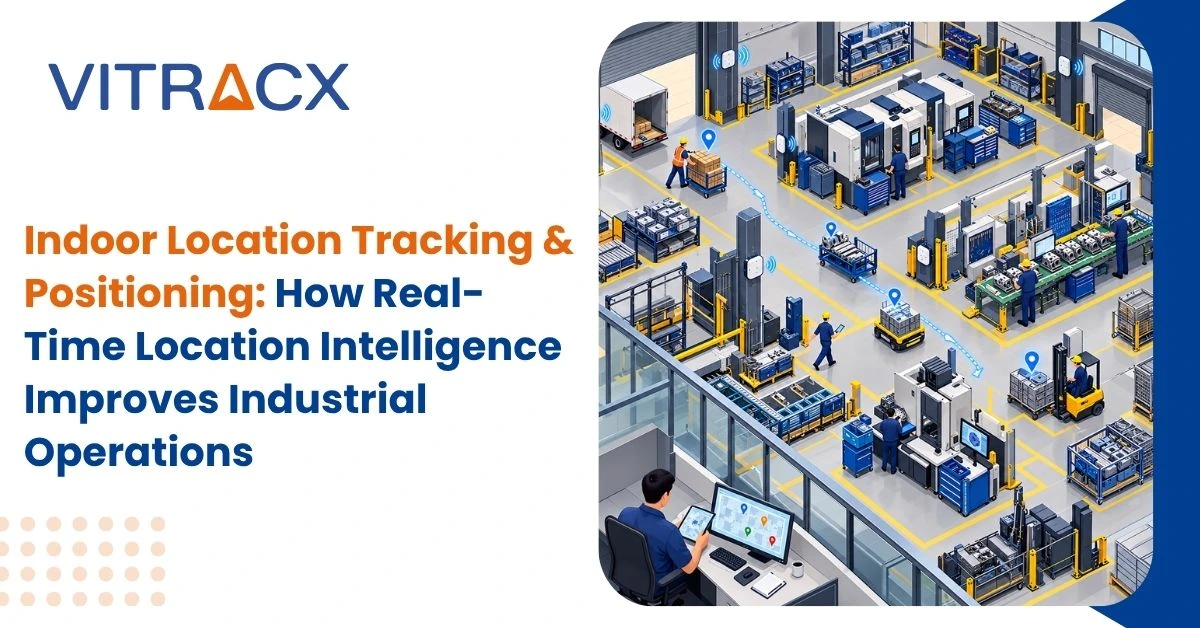
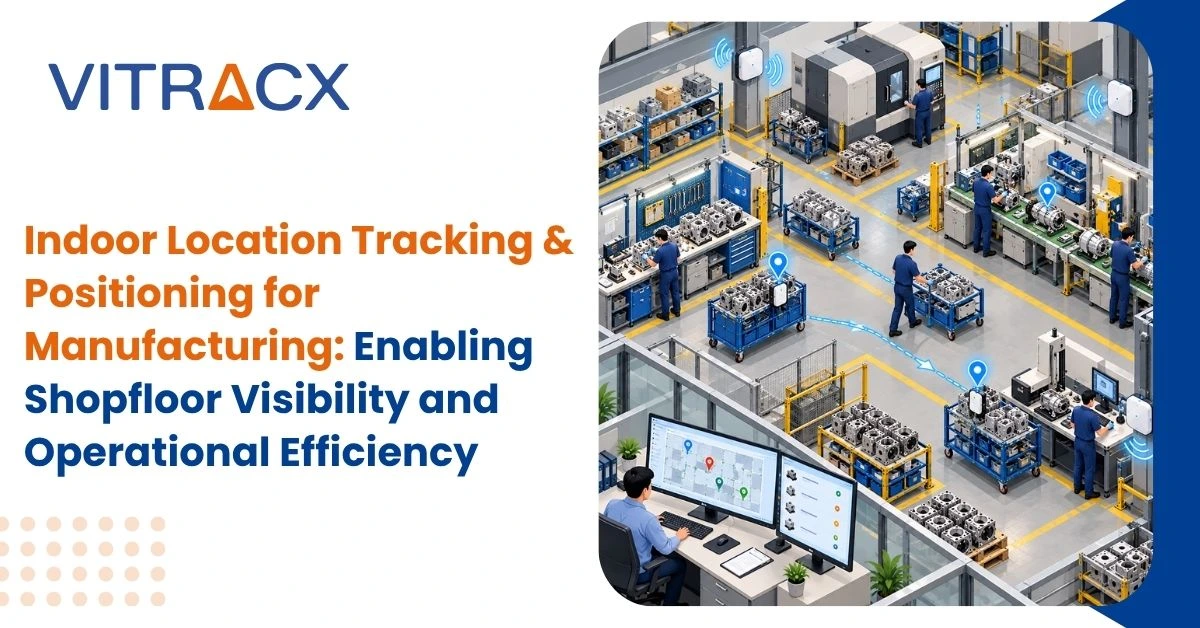
Industrial facilities manage moving equipment, work-in-progress (WIP) materials, tools, and people across multiple production areas. When teams lack accurate location information, finding resources, coordinating material movement, and identifying operational delays can become challenging. Real-time location systems help address these issues by providing visibility into where tagged assets are located and how they move throughout a facility.
With UWB Tracking, manufacturers can use precise indoor positioning data to improve asset visibility, understand movement patterns, and support better operational decisions. When integrated with a suitable tracking platform, this information helps teams coordinate resources and identify opportunities to improve industrial workflows.
What Is Indoor Location Tracking and Positioning?
Indoor location tracking determines the position of tagged assets, equipment, or people inside buildings where GPS may not provide reliable coverage. Depending on the required accuracy and application, systems can use technologies such as Bluetooth Low Energy (BLE), Ultra-Wideband (UWB), or RFID.
These technologies serve different purposes. BLE can support proximity detection and indoor positioning, while RFID is commonly used for identification and tracking at designated reading points. UWB Tracking uses short radio pulses and timing measurements to calculate positions with high precision when the system is appropriately deployed.
A complete indoor positioning solution typically includes tags, anchors or receiving devices, positioning software, and a digital interface that displays location information.
How UWB Tracking Works in Industrial Environments?
A UWB Tracking uses radio pulses transmitted by compatible tags and received by strategically positioned anchors. The system calculates the tag’s location using timing-based techniques, such as Time of Flight (ToF) or Time Difference of Arrival (TDoA), depending on its architecture.
The resulting location data can be processed by a tracking platform and displayed on a digital facility map. Depending on the deployment, teams may also access movement history, zone-based alerts, and location analytics.
Positioning performance depends on anchor placement, facility layout, environmental conditions, and system configuration. A site assessment helps determine the appropriate infrastructure and accuracy requirements.
How Real-Time Location Intelligence Improves Industrial Operations?
1. Faster Asset and Equipment Locating
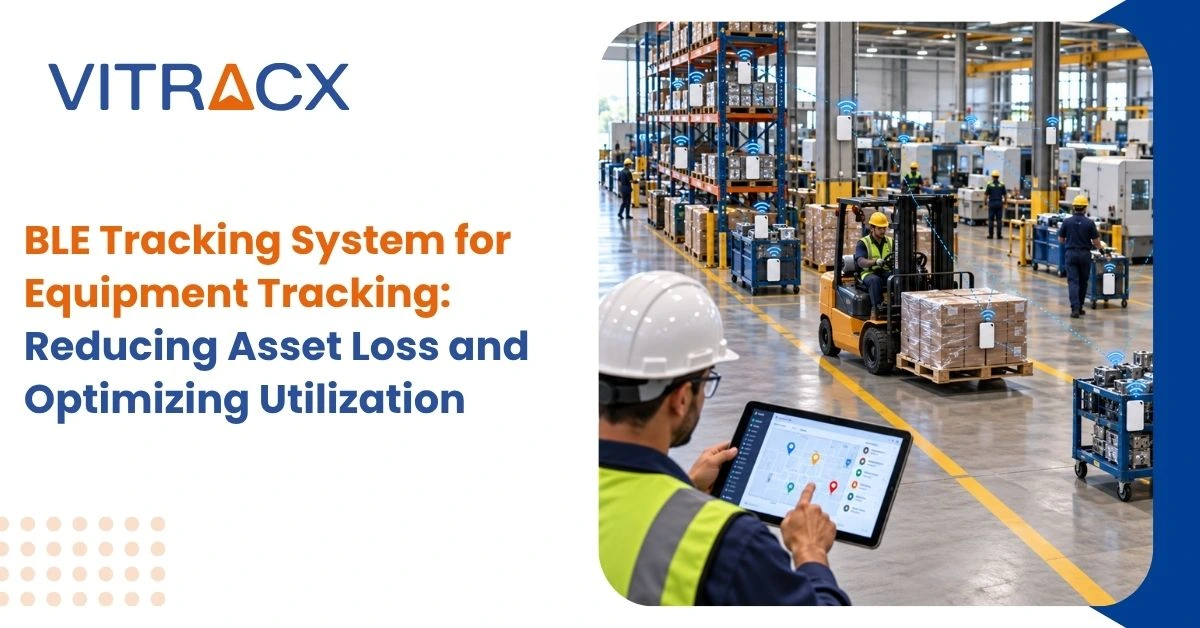
Finding forklifts, trolleys, tools, and mobile equipment can consume valuable operational time. Indoor positioning supported by UWB Tracking helps authorized personnel check reported locations rather than search multiple production or storage areas manually. This can reduce unnecessary searching and support more coordinated resource allocation.
2. Better Visibility into Work-in-Progress Materials
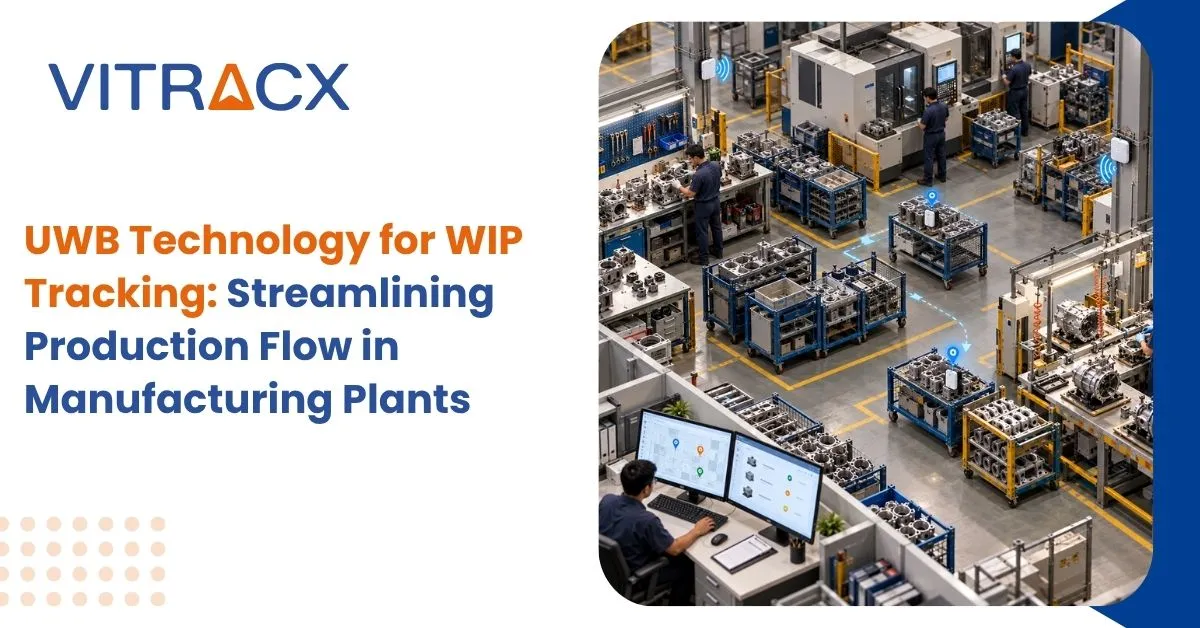
WIP materials often move between processing, assembly, inspection, and storage. Location information can help teams identify where tagged bins, pallets, or semi-finished products are currently reported. Combined with production-stage data, this visibility can support material coordination and help teams investigate unexpected waiting periods.
3. Improved Movement and Bottleneck Analysis
Location history can reveal travel paths, repeated movement, and extended dwell times in particular zones. When UWB Tracking data is reviewed alongside production schedules and process information, teams can investigate potential bottlenecks and identify areas where workflows may need adjustment. Location data alone does not explain the cause of every delay, so operational context remains important.
4. Greater Operational Awareness
Configured geofencing rules can generate alerts when tagged assets enter or leave designated areas. Depending on system capabilities, dashboards can also provide movement views and utilization information. When supported by UWB Tracking, these features help teams monitor resource activity and respond to relevant events more consistently.