Skip to content
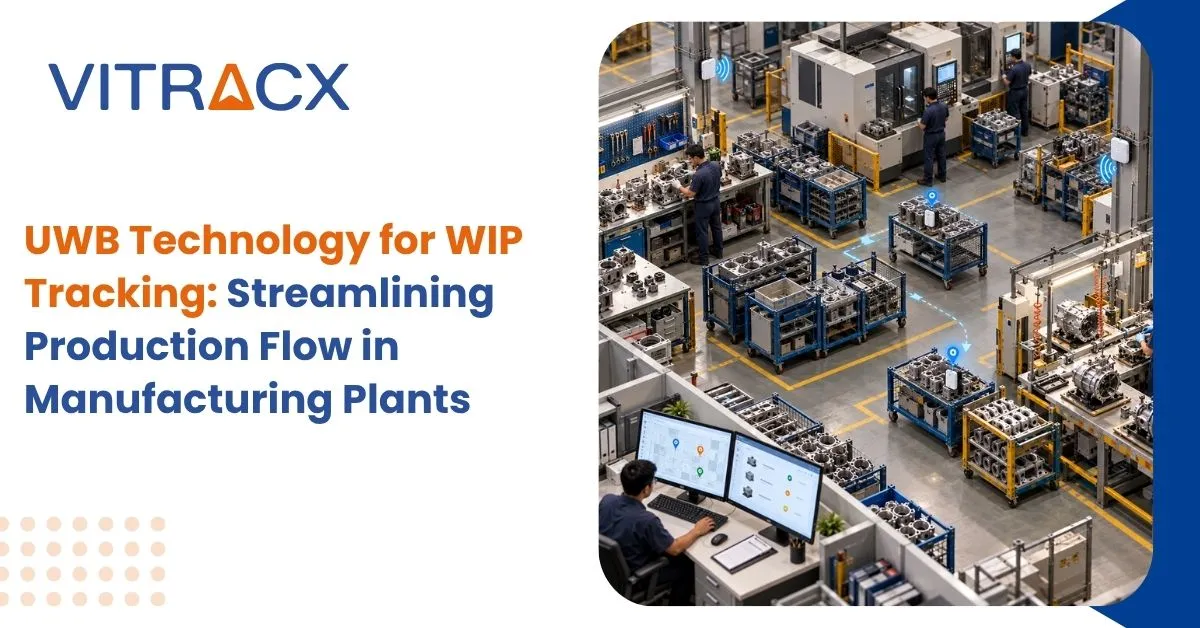
UWB Technology for WIP Tracking: Streamlining Production Flow in Manufacturing Plants

Work-in-progress (WIP) materials move through multiple stages before becoming finished products. When manufacturers cannot see where materials are located or how they move between workstations, production teams may spend time searching for items, experience delays, and struggle to identify bottlenecks. UWB Technology helps address these challenges by providing precise, real-time location information for tagged materials and production assets. When integrated with a WIP tracking system, it helps manufacturers gain better visibility into production flow and make informed operational decisions.

How UWB Technology Supports WIP Tracking?

Ultra-wideband (UWB) is a radio-based positioning technology designed for high-precision indoor tracking. In a manufacturing plant, UWB tags can be attached to selected materials, trolleys, bins, pallets, or semi-finished products.

Anchors or gateways receive signals from these tags, and the positioning system calculates their locations using methods such as Time of Flight (ToF) or Time Difference of Arrival (TDoA). This information helps teams identify where tagged WIP items are located across the production floor.

Unlike manual searches or periodic status updates, UWB Technology can provide location data that supports more timely tracking of materials as they move between production areas.

Improving Visibility Across Production Stages

A connected WIP tracking platform can use UWB location data to help teams monitor material movement across manufacturing stages. Operators and production managers can locate items on a digital floor map instead of relying entirely on manual checks.

This visibility can support several operational activities:

  • Locate WIP materials: Find semi-finished products, pallets, bins, and trolleys more efficiently.
  • Monitor production flow: Understand where materials are moving between workstations and process areas.
  • Identify potential bottlenecks: Highlight items that remain in a designated area longer than expected when the platform is configured with suitable rules.
  • Support traceability: Use location information alongside production records to improve visibility into material movement and process stages.

By connecting location information with production workflows, UWB Technology for WIP Tracking helps teams investigate delays, coordinate material handling, and make better-informed decisions about manufacturing flow.

Identifying Bottlenecks and Improving Production Flow

Production bottlenecks can occur when materials wait for the next operation, accumulate near a workstation, or become difficult to locate. Although location data alone cannot explain every cause of a delay, it gives production managers useful evidence for investigating these situations.

With UWB Technology, teams can use location information and configured dwell-time alerts to identify materials that have remained in particular zones beyond expected thresholds. Managers can then investigate whether the delay relates to workstation availability, material handling, scheduling, or another operational issue.

Location history and production-flow visualisations can also help teams understand recurring movement patterns. These insights support better coordination between workstations and help managers make informed decisions about material handling and production planning.

Want to streamline production flow with precise WIP tracking? Contact Us to explore UWB-based tracking solutions for manufacturing plants.

Why UWB Is Useful in Manufacturing Plants?

Manufacturing environments often contain machinery, metal structures, and complex layouts that can make indoor positioning challenging. UWB uses very short radio pulses across a wide frequency spectrum, supporting precise positioning in demanding industrial environments.

With UWB Technology, manufacturers can improve the visibility of WIP materials and production assets, helping teams reduce unnecessary searching and better understand material movement. The overall result depends on the facility layout, system configuration, tag deployment, and integration with existing operational systems.

Connecting WIP Tracking with MES, ERP, and WMS

Location information becomes more valuable when connected with existing manufacturing systems. A WIP tracking platform can integrate with:

  • Manufacturing Execution Systems (MES): Connect location visibility with production-stage information and manufacturing progress.
  • Enterprise Resource Planning (ERP): Relate material movement to work orders, production progress, and material consumption records.
  • Warehouse Management Systems (WMS): Support visibility into inventory movement, material inflow and outflow, and replenishment activities.

These integrations combine physical location data with operational records to support better production coordination. While UWB Technology provides positioning information, the tracking platform and connected systems help manufacturers use that data for workflow monitoring, material traceability, and operational reporting.

Implementing UWB-Based WIP Tracking

Successful deployment of UWB Technology for WIP tracking requires selecting the materials that need tracking, determining appropriate tag placement, and planning anchor locations around the facility layout. Manufacturers should also consider production-zone boundaries, required location accuracy, update frequency, and integration needs.

Because machinery, metal structures, and changing facility conditions can affect deployment requirements, the system should be planned and validated for the intended environment. Configured alerts and production-stage rules should reflect actual operating processes rather than assuming every material follows an identical route.

Frequently Asked Questions

It is a positioning technology that helps determine the location of tagged WIP materials and production assets within a manufacturing facility.

Tags transmit short radio pulses to anchors or gateways. The positioning system calculates their locations using methods such as ToF or TDoA.

Yes. Location data combined with configured tracking rules can help teams identify materials that remain in specific production zones longer than expected.

A WIP tracking platform can integrate with MES, ERP, and WMS systems to connect location information with production progress, work orders, and inventory data.

UWB can support precise indoor positioning in complex manufacturing environments, including areas with metal structures. Deployment requirements depend on the facility and application.

Conclusion

An UWB Technology can strengthen WIP tracking by giving manufacturers more precise, real-time visibility into the location and movement of materials. Combined with a WIP tracking platform and integrations with MES, ERP, or WMS, it can help teams locate items, monitor production flow, and identify potential delays. This visibility supports more informed decisions and a better-coordinated manufacturing process.

Kunj Patel is Co-Founder & CGO at Vitracx, where he designs and scopes RTLS solutions for manufacturing, warehouse, and healthcare clients — turning shop-floor tracking challenges into working systems. He writes about solutioning for Industry 4.0 and real-time visibility.

Back To Top
WhatsApp chat