Skip to content
How RTLS Helps Optimize Material Flow in Factories?

Material movement is a critical part of factory operations. Raw materials, components, WIP, tools, and finished goods continuously move between storage areas, production stations, inspection points, and dispatch zones. When these movements are difficult to monitor, teams may spend time searching for materials, waiting for components, or dealing with production delays.

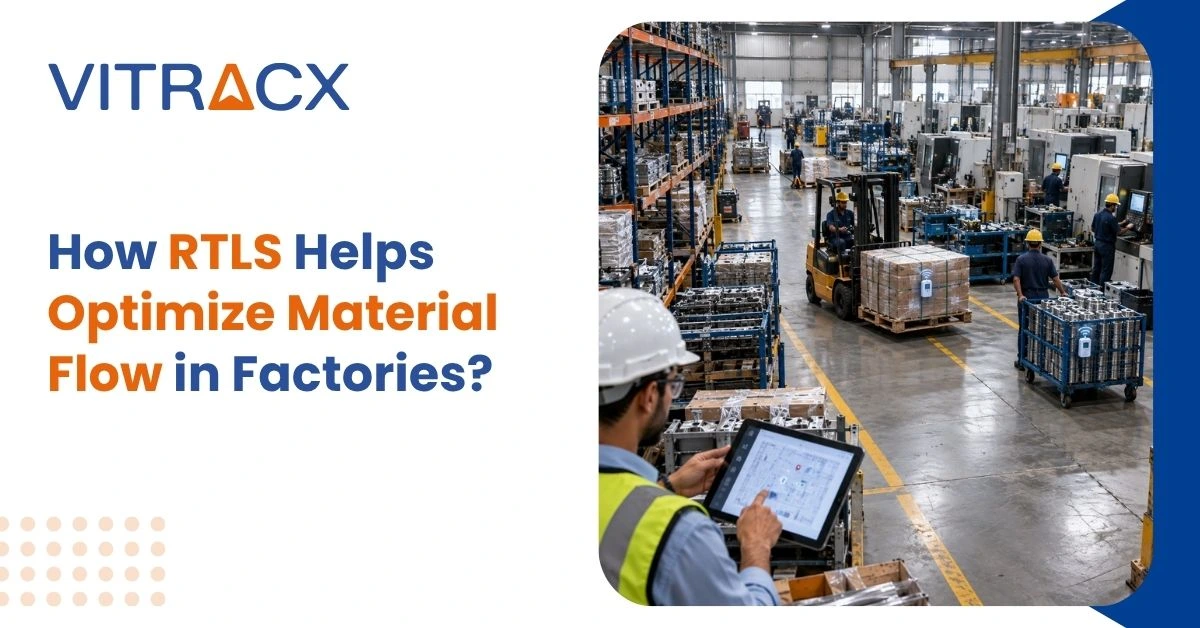
The RTLS provides real-time location visibility by tracking tagged assets, materials, and WIP as they move through the factory. This helps production teams understand where materials are, how they are moving, and where operational bottlenecks may be developing.

Why Is Material Flow Difficult to Manage in Factories?

Factory materials rarely stay in one place. A component may move from receiving to storage before reaching a production station, while WIP can pass through several stages before inspection or completion. Without reliable location information, employees may have to physically search for materials or depend on manual updates.

By using RTLS, factories can create a real-time view of tracked materials, WIP, assets, and equipment. This gives production and operations teams better information about the current location of items moving through the facility.

How Does RTLS Improve Material Flow Visibility?

RTLS uses location-enabled tags, anchors or gateways, and a positioning platform to continuously determine the location of tracked items. Signals from tags attached to materials, assets, equipment, or WIP are captured by the installed infrastructure and processed to calculate their location.

The resulting location information can be displayed through dashboards and other visibility tools. As materials move between different areas, RTLS can continuously update their location, providing a clearer picture of material movement across the factory.

How Can RTLS Reduce Material Search Time?

Searching for missing or misplaced materials can interrupt production activities. Employees may need to check storage areas, production zones, or staging locations before finding the required item.

With RTLS, teams can use real-time location information to identify where a tracked material or WIP item is located. Instead of relying entirely on manual searching, employees can use location visibility to find the required item more efficiently. This can help reduce unnecessary movement and keep production activities on schedule.

How Does RTLS Help Identify Material Flow Delays?

Efficient production depends on materials reaching the right location at the right time. If materials or WIP remain in a particular area for longer than expected, it may indicate a delay in the workflow.

The RTLS provides location history that can help teams understand how materials move through the factory. By reviewing movement patterns and location events, operations teams can identify areas where materials spend excessive time or where movement between production stages may need attention.

Looking to improve material visibility across your factory? Contact Us to explore RTLS solutions for your operations.

How Does RTLS Support Production Coordination?

Material movement often involves multiple teams, including warehouse, production, quality, and logistics personnel. When each team has limited visibility of material locations, coordination can become difficult.

The RTLS provides a shared location view of tracked materials and WIP, helping teams understand where items are within the production environment. This can support better coordination when materials need to be moved between storage, production, inspection, and other operational areas.

What Factory Materials Can Be Tracked?

The technology can be applied to different types of moving items depending on the operational requirement, including:

  • Raw materials and components
  • Work-in-progress items
  • Tools and production equipment
  • Material handling equipment
  • Finished goods
  • Mobile trolleys, fixtures, and carts

This makes RTLS useful for factories where material movement and location visibility directly affect production workflows.

How Does RTLS Support Smarter Factory Operations?

The value of RTLS extends beyond simply showing an item’s location. Location information can contribute to broader operational intelligence by providing visibility into material movement, WIP flow, asset utilization, and production activities.

The Vitracx RTLS platform can also integrate location information with ERP, MES, and WMS systems. This helps connect real-time location data with existing digital workflows and supports the development of more connected Industry 4.0 operations.

Frequently Asked Questions

RTLS provides real-time location information for tracked materials, WIP, assets, and equipment, helping teams understand movement and identify potential delays.

Yes. RTLS can provide real-time visibility of WIP as it moves between different production stages and operational areas.

Yes. Location visibility can help teams identify where tracked materials or assets are located instead of relying entirely on manual searches.

RTLS can provide location history and movement information that helps teams examine where materials remain or move through the factory for longer periods.

According to the provided Vitracx information, RTLS can integrate with ERP, MES, and WMS systems to connect location information with broader operational workflows.

Conclusion

Optimizing material flow requires more than knowing what materials are available. Factory teams also need visibility into where materials and WIP are moving and where delays may occur. RTLS provides this location intelligence by continuously tracking tagged items across defined operational areas.

With better visibility into material movement, factories can reduce unnecessary searching, understand production flow more clearly, improve coordination, and build more connected manufacturing operations.

Kunj Patel is Co-Founder & CGO at Vitracx, where he designs and scopes RTLS solutions for manufacturing, warehouse, and healthcare clients — turning shop-floor tracking challenges into working systems. He writes about solutioning for Industry 4.0 and real-time visibility.

Back To Top
WhatsApp chat