Skip to content
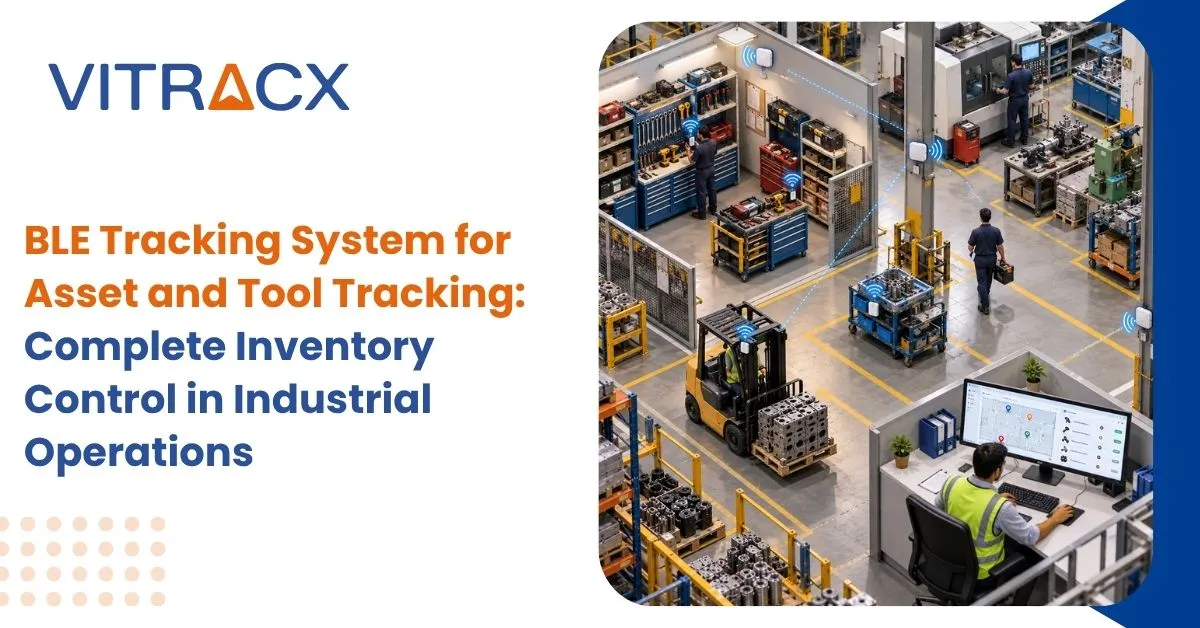
BLE Tracking System for Asset and Tool Tracking: Complete Inventory Control in Industrial Operations

Industrial facilities often manage hundreds or thousands of tools, equipment items, components, and movable assets across production floors, maintenance areas, warehouses, and storage zones. When these assets are tracked manually, teams can spend significant time searching for items or updating records. A BLE Tracking solution provides connected location visibility, helping organizations understand where tagged assets are and improve control over their inventory.

What Is BLE Tracking for Asset and Tool Management?

A BLE Tracking uses Bluetooth Low Energy tags and gateways to identify and monitor assets within an indoor environment. A BLE tag attached to a tool or asset broadcasts signals at regular intervals, while gateways installed throughout the facility receive those signals.

The collected information is processed by a backend platform to provide location visibility, alerts, and tracking information. Depending on the positioning method selected, organizations can use BLE for precise positioning or room- and zone-level monitoring.

How Does BLE Tracking Work?

The process starts by assigning a BLE tag to the asset that needs to be monitored. The tag contains an identifiable digital identity associated with the corresponding tool, equipment, or inventory item.

As the asset moves through the facility, the tag broadcasts Bluetooth signals. Gateways receive these signals and send the information to the connected tracking platform.

BLE positioning can use two primary approaches:

  • BLE AoA (Angle of Arrival): Uses antenna arrays to determine the direction of incoming signals and supports approximately 1-meter positioning.
  • BLE RSSI (Received Signal Strength Indicator): Uses signal strength to estimate proximity or identify the zone where an asset is located.

This flexibility allows organizations to select the approach that matches their tracking requirements and budget.

How BLE Improves Tool Tracking?

Tools can frequently move between production lines, maintenance areas, tool rooms, and workstations. Without location visibility, finding a required tool can become a time-consuming task.

With BLE Tracking, tagged tools can be monitored as they move through defined areas. Teams can gain better awareness of tool locations and reduce unnecessary searching. This is particularly useful for facilities managing large numbers of mobile tools and equipment.

Want better visibility of your tools and industrial assets? Contact us to explore BLE-based tracking solutions.

Supporting Better Inventory Control

Inventory control is not only about knowing how many items are available. It also requires visibility into where assets are located and how they move through operational areas.

A BLE Tracking system can help organizations create a more connected view of tagged inventory. Repeated detections can provide useful information about asset presence, movement, and zone activity, supporting better operational coordination.

BLE Tracking for Industrial Operations

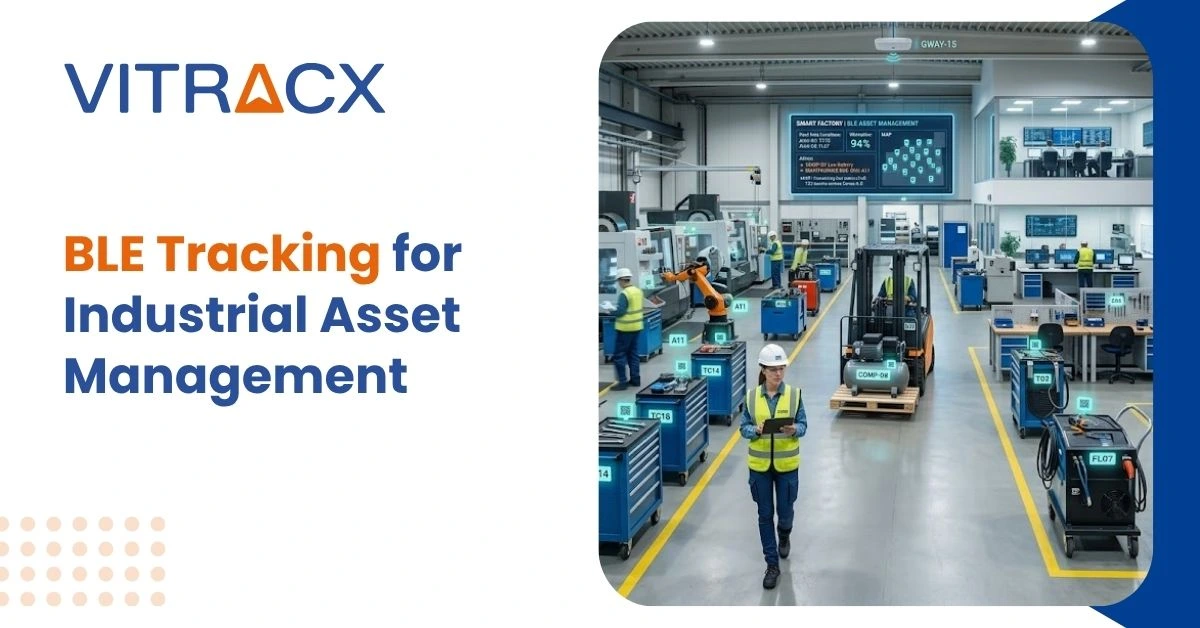
Industrial environments can require different levels of tracking accuracy across different areas. For example, a manufacturing floor may require more precise tracking of tools or equipment, while a storage area may only need zone-level visibility.

BLE supports this flexibility through AoA and RSSI technologies. Organizations can therefore select high-precision BLE positioning where accuracy matters and more cost-effective zone tracking where exact positioning is unnecessary.

Key Benefits of BLE Asset and Tool Tracking

A properly designed BLE deployment can help organizations:

  • Improve visibility of tools and movable assets
  • Reduce time spent searching for equipment
  • Monitor asset presence across defined zones
  • Support better inventory coordination
  • Improve utilization of shared equipment
  • Create digital movement and location records
  • Scale tracking across different operational areas

Choosing the Right BLE Tracking Approach

The right approach depends on the required accuracy, facility layout, asset type, and operational objective. BLE Tracking using AoA can be suitable when more precise positioning is required, while RSSI can provide a practical option for room- or zone-level tracking.

For industrial operations, selecting the appropriate combination of tags, gateways, positioning technology, and software is important for achieving useful and reliable asset visibility.

Frequently Asked Questions

BLE Tracking uses Bluetooth Low Energy tags and gateways to monitor the location or presence of assets, tools, equipment, and people within indoor environments.

A BLE tag attached to an asset broadcasts signals that are received by gateways. The tracking platform processes this information to provide location, proximity, or zone-level visibility.

BLE AoA uses antenna arrays to determine signal direction and supports more precise positioning. RSSI uses signal strength to estimate proximity or identify the asset’s zone.

Yes. BLE can track tools, equipment, and other movable assets across manufacturing areas, maintenance zones, storage rooms, and other defined operational spaces.

Yes. BLE is designed for scalable deployment, allowing organizations to begin with selected areas and expand tracking across additional assets and facilities as requirements grow.

Conclusion

A BLE Tracking system can transform asset and tool management by connecting physical inventory with digital location information. Instead of relying entirely on manual searches and records, industrial teams can gain better visibility into where tagged assets are located and how they move across the facility.

With support for both precise AoA positioning and cost-effective RSSI tracking, BLE provides a flexible foundation for improving inventory control across modern industrial operations.

Kunj Patel is Co-Founder & CGO at Vitracx, where he designs and scopes RTLS solutions for manufacturing, warehouse, and healthcare clients — turning shop-floor tracking challenges into working systems. He writes about solutioning for Industry 4.0 and real-time visibility.

Back To Top
WhatsApp chat