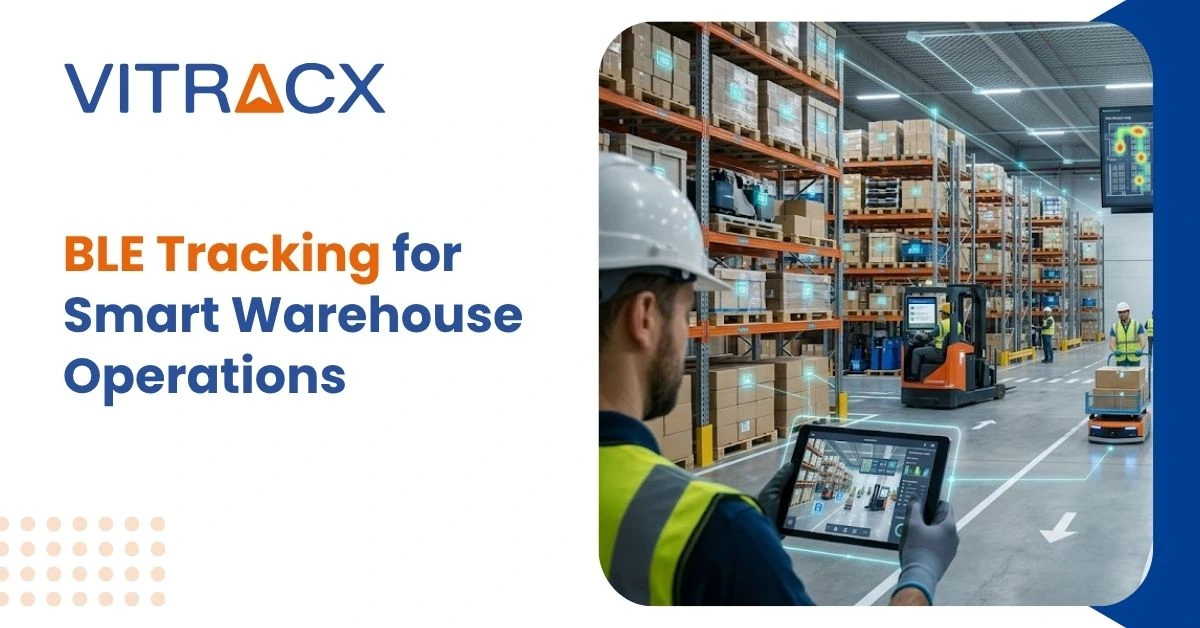
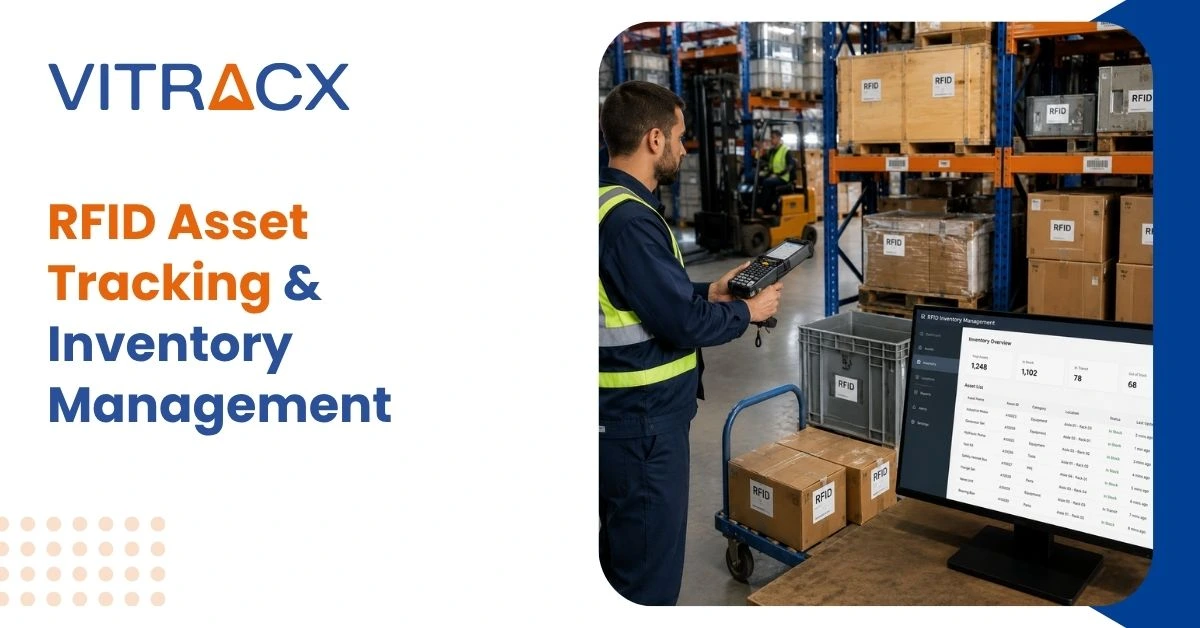
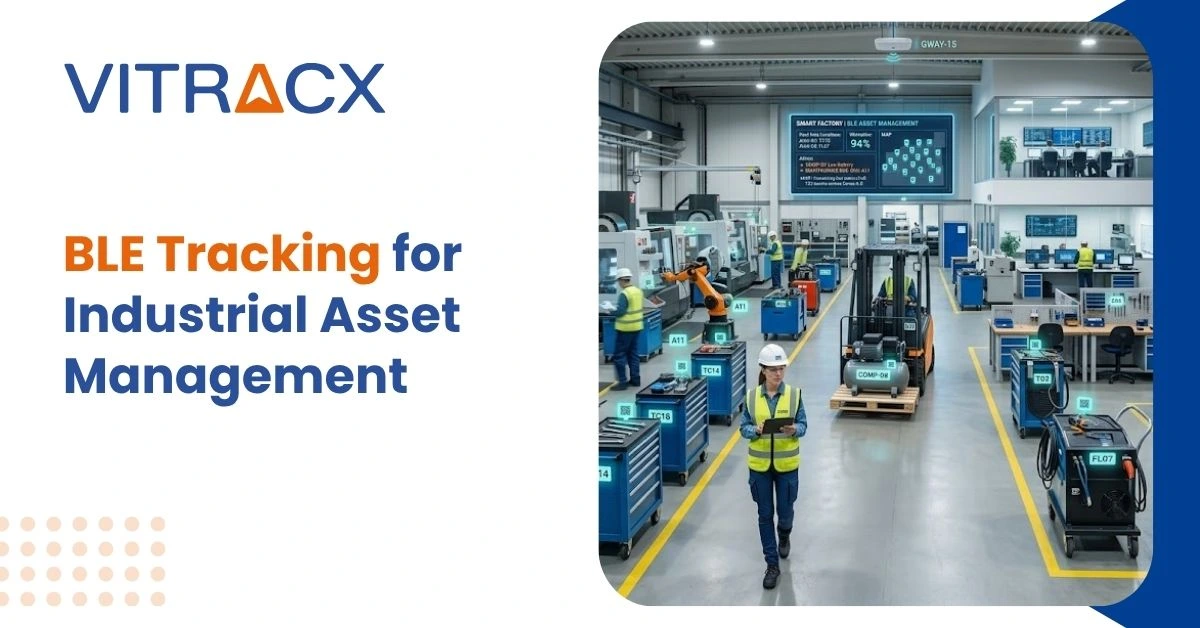
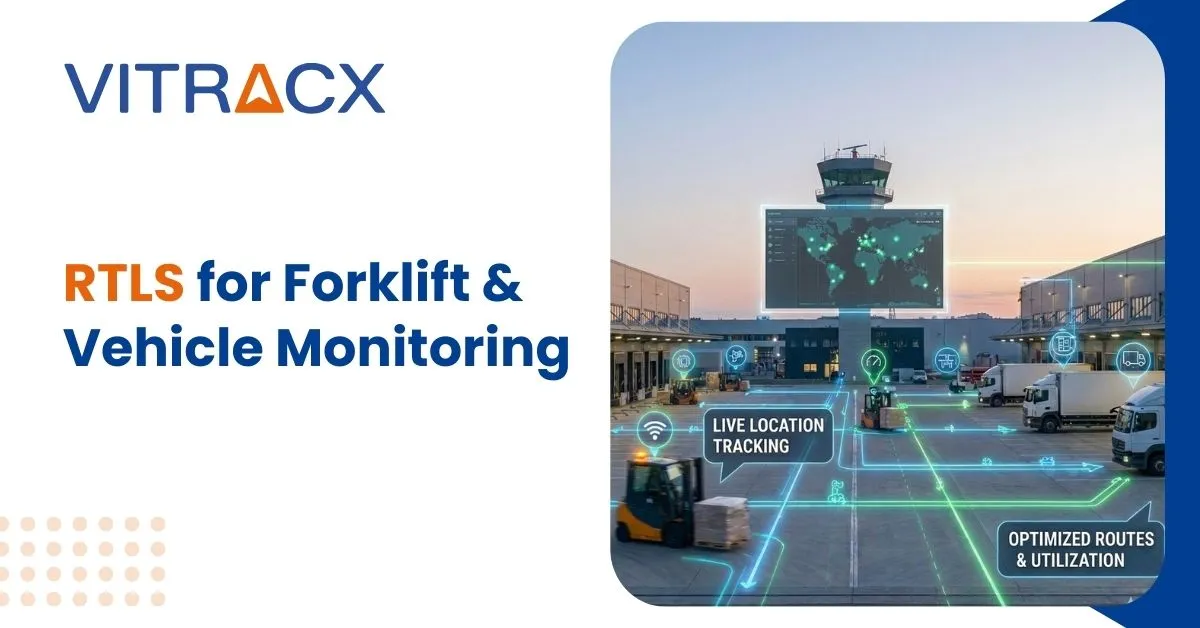
Modern warehouses operate in fast-paced environments where inventory, pallets, forklifts, material handling equipment, and workforce activities must remain synchronized to ensure smooth operations. However, limited visibility into asset movement, equipment availability, and workflow status often leads to delays, misplaced inventory, and reduced operational efficiency.
BLE Tracking provides a practical and scalable solution for improving warehouse visibility through real-time indoor positioning. By leveraging Bluetooth Low Energy technology, organizations can monitor assets, equipment, and personnel with the right balance of accuracy, scalability, and cost. Whether managing inventory movement, optimizing forklift utilization, or improving workforce visibility, BLE Tracking enables warehouses to transition from manual processes to connected, data-driven operations.
As part of a comprehensive RTLS platform, BLE Tracking helps organizations build smarter warehouse operations that support automation, improve productivity, and accelerate digital transformation.
Why Smart Warehouses Need Real-Time Visibility?
Warehouses serve as critical hubs within the supply chain, where inventory movement, order fulfillment, and material handling must occur without disruption. As warehouse operations expand, maintaining visibility through manual processes becomes increasingly challenging.
Common operational challenges include:
- Difficulty locating pallets and inventory
- Delayed order picking and dispatch
- Limited visibility of forklifts and mobile equipment
- Inefficient asset utilization
- Manual inventory verification
- Lack of real-time operational insights
Without continuous visibility, warehouse teams spend valuable time searching for assets instead of focusing on productive activities. BLE Tracking addresses these challenges by providing accurate location data that enables faster decisions and more efficient warehouse operations.
What is BLE Tracking?
BLE Tracking is an indoor positioning solution that uses Bluetooth Low Energy technology to monitor the location and movement of assets, equipment, inventory, and personnel within a facility.
BLE tags attached to operational assets regularly transmit Bluetooth signals that are received by strategically installed gateways or locators. The RTLS platform processes this information to provide real-time visibility, movement history, alerts, and operational analytics.
Depending on operational requirements, BLE Tracking supports two positioning methods:
- BLE Angle of Arrival (AoA): Delivers approximately one-meter accuracy for applications requiring precise indoor positioning.
- BLE Received Signal Strength Indicator (RSSI): Provides room or zone-level visibility, making it ideal for cost-effective tracking applications.
This flexibility allows organizations to deploy the most suitable tracking solution based on workflow requirements, facility size, and operational objectives.
How BLE Tracking Improves Smart Warehouse Operations?
Implementing BLE Tracking enables warehouses to automate visibility across critical operational workflows while reducing reliance on manual tracking methods.
Improve Inventory Visibility
Warehouse inventory continuously moves between receiving, storage, picking, packing, and dispatch areas. BLE Tracking provides real-time visibility into inventory movement, helping teams quickly locate items and reduce search time.
Optimize Forklift and Equipment Utilization
Forklifts, pallet movers, and other material handling equipment are essential to warehouse productivity. BLE Tracking enables organizations to monitor equipment movement, identify idle resources, and improve utilization across warehouse operations.
Enhance Workforce Productivity
Warehouse personnel often spend significant time locating equipment, inventory, or workstations. By providing accurate indoor visibility, BLE Tracking helps employees complete tasks more efficiently while improving workflow coordination.
Support Zone-Based Operations
Many warehouse processes rely on monitoring activities within designated operational zones. BLE RSSI technology enables organizations to track assets entering or leaving storage areas, loading docks, restricted locations, or dispatch zones without requiring high-precision positioning.
Strengthen Operational Decision-Making
Live dashboards and operational analytics provide supervisors with valuable insights into warehouse activities. With continuous location visibility, organizations can identify bottlenecks, optimize workflows, and make informed operational decisions.
| Warehouse Challenge |
How BLE Tracking Helps |
| Misplaced inventory |
Provides real-time asset visibility |
| Equipment search delays |
Tracks forklifts and warehouse equipment |
| Slow order fulfillment |
Improves inventory location accuracy |
| Limited workflow visibility |
Delivers live operational insights |
| Inefficient zone monitoring |
Enables automated zone-based tracking |
Choosing the Right BLE Tracking Approach
One of the key advantages of BLE Tracking is its ability to support different operational requirements without deploying unnecessary infrastructure.
Organizations requiring higher positioning accuracy for monitoring equipment movement or workflow progression can implement BLE AoA technology, which provides near real-time positioning with approximately one-meter accuracy.
For warehouses focused on inventory visibility, storage management, or zone monitoring, BLE RSSI offers an economical solution that delivers reliable room-level or zone-based tracking.
By selecting the appropriate positioning method for each operational area, organizations can balance accuracy, scalability, and deployment costs while maintaining complete warehouse visibility.