Industrial assets are essential to maintaining efficient production, smooth maintenance activities, and uninterrupted operations. From…
- 10 minute read
- Product Benefits
- Vrund Patel
Managing physical assets and inventory is an important part of daily operations across manufacturing facilities, warehouses, logistics centers, and commercial environments. Organizations handle tools, equipment, materials, containers, and inventory items that may move between departments, storage areas, and workstations. Maintaining organized information about these resources can become difficult when processes rely heavily on manual registers, physical verification, and repeated data entry.
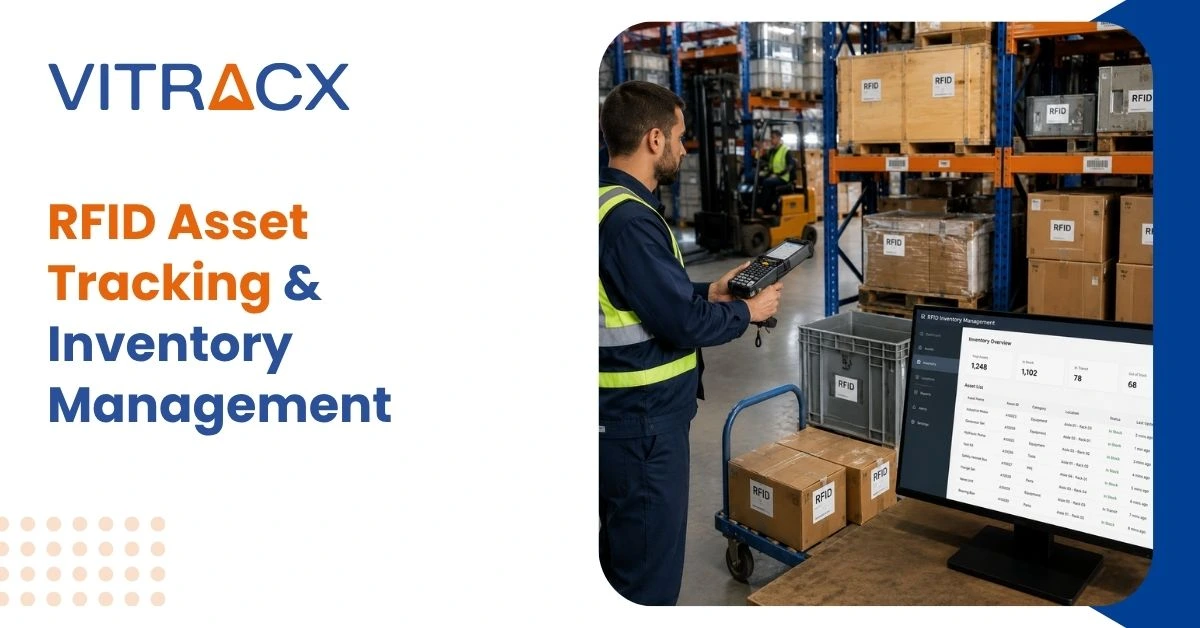
An RFID Tracking System provides an electronic approach to identifying and managing physical resources. RFID technology uses tags and readers to capture identification information and connect physical items with digital records. The collected data can then be processed through a software platform to support asset management and inventory-related workflows.
What Is RFID Asset Tracking?
RFID asset tracking is the process of using radio frequency identification technology to electronically identify physical assets. An RFID tag is attached to an asset and associated with a unique record in a connected management platform.
When a tagged asset enters the operating range of compatible RFID infrastructure, its identification information can be captured electronically. The RFID Tracking System transfers this information to a connected software platform, where it can be processed and associated with the relevant asset record.
This approach can be applied to different types of operational resources, including:
- Production tools
- Maintenance equipment
- Warehouse assets
- Material handling equipment
- Reusable containers
- Trolleys
- Materials
- Inventory items
- Finished goods
The purpose of RFID asset tracking is to create a connection between a physical resource and its digital identification record. Instead of depending entirely on manual entries, organizations can electronically capture identification information at configured operational points.
How Does an RFID Tracking System Work?
An RFID Tracking System combines multiple hardware and software components to capture and manage identification information. Although the exact configuration varies by application, the process generally follows several stages.
1. Tagging Assets and Inventory
The process begins by attaching RFID tags to assets, tools, equipment, containers, or inventory items. Each tag can be linked with a specific record in the connected software platform.
The tag acts as an identification reference for the physical resource. Information associated with that item can then be managed through the system.
2. Capturing Identification Information
RFID readers communicate with compatible tags within configured reading areas. When a tagged resource is detected, the reader captures its identification information.
Readers may be installed at fixed operational points or used as part of mobile workflows, depending on the application and identification requirements.
3. Processing the Data
The captured information is transferred to a connected platform. The RFID Tracking System processes the data and associates it with the relevant asset or inventory record.
Organizations can configure data workflows according to their operational requirements and the information they need to manage.
4. Managing Records
Users can access information through a centralized interface. The collected data can support asset identification, inventory verification, and other workflows related to the handling or movement of tagged resources.
RFID Tracking System for Inventory Management
Inventory management involves multiple stages, including receiving, storage, internal movement, verification, and dispatch. As inventory volumes increase, manual identification and repeated record updates can require additional time and effort.
An RFID Tracking System supports electronic identification of tagged inventory through readers and connected software. The captured information can become part of a broader inventory management workflow.
RFID technology can support activities such as:
- Inventory identification
- Receiving verification
- Storage processes
- Material movement
- Dispatch verification
- Inventory audits
- Reusable resource management
The value of an RFID deployment depends on how effectively it matches the existing workflow. Before implementation, organizations should identify where information needs to be captured and how that information will be used.
Key Components of an RFID Tracking System
A complete RFID deployment includes several components that work together to identify physical resources and process the captured information.
RFID Tags
RFID tags are attached to assets, tools, equipment, containers, or inventory. Each tag provides an identification reference that can be linked with a digital record.
Tag selection should consider the asset material, physical size, installation requirements, and operating environment.
RFID Readers
Readers communicate with compatible RFID tags and capture identification information. They can be positioned at fixed locations or used in mobile workflows according to the identification requirements.
Antennas
Antennas support communication between readers and tags. Their placement is an important part of deployment planning because the operational environment and reading requirements can influence system performance.
Software Platform
The software platform receives and processes captured information. It provides a centralized environment for managing records associated with assets and inventory.
System Integration
Depending on operational requirements, an RFID Tracking System can connect with ERP, WMS, or other enterprise platforms. Integration planning should focus on how RFID information will support existing operational processes.
Benefits of an RFID Tracking System
When aligned with operational requirements, an RFID Tracking System can support several improvements in asset and inventory management.
- Improved Asset Identification: Tagged resources can be electronically identified through compatible infrastructure, supporting more organized digital records.
- Reduced Manual Data Collection: Electronic identification can reduce repeated manual data entry at configured operational points.
- Better Information Access: Centralized software can make identification information more accessible to relevant operational users.
- Support for Verification Workflows: RFID can support identification during receiving, storage, movement, dispatch, and inventory verification activities.
- Centralized Record Management: Information collected from different reading points can be processed through a connected platform instead of being maintained only in separate manual records.
- Support for Connected Operations: RFID information can become part of broader workflows when connected with relevant enterprise systems.
These outcomes depend on the deployment design. Technology alone cannot replace process planning, and the RFID Tracking System should be configured around genuine operational requirements.
Improving Asset and Inventory Visibility
Operational visibility is important when organizations manage resources across large facilities or multiple departments. Information about assets and inventory may otherwise be distributed across separate records and systems.
An RFID Tracking System can help create a more connected information environment by linking tagged physical resources with digital records.
This approach can support:
- Organized asset information
- Digital inventory records
- Centralized information access
- Reduced manual documentation
- Connected operational workflows
- Better coordination between departments
Electronic identification provides a foundation for connecting physical resources with operational data. However, the system should be configured according to the information genuinely required by the organization.
How to Implement an RFID Tracking System?
Effective implementation begins with operational planning rather than hardware selection alone.
- Define the Objective: Organizations should first determine what needs to be identified and why. This may include tools, equipment, inventory, materials, containers, or other operational resources.
- Evaluate the Environment: The physical environment should be assessed before deployment. Resource movement, operational zones, installation conditions, and surrounding infrastructure can influence the design.
- Select Suitable Hardware: Tags, readers, and antennas should be selected according to the specific application rather than as a standard configuration.
- Plan Reading Locations: Reader placement should align with points where identification information needs to be captured. Placement should reflect the actual movement of resources.
- Configure the Software: The connected platform should organize information according to the organization’s asset and inventory workflows.
- Consider Integration: If RFID information needs to connect with ERP, WMS, or other enterprise systems, the data flow should be planned before implementation.
- Test the Deployment: Testing can help evaluate whether the RFID Tracking System captures the required information within the intended operational environment before wider deployment.
Choosing the Right RFID Tracking System
The right RFID Tracking System depends on the specific operational application. Selecting individual components without understanding the workflow may create a system that captures information without effectively supporting useful processes.
Organizations should consider:
- Type of assets or inventory
- Operational environment
- Required identification points
- Resource movement patterns
- Hardware compatibility
- Reader placement
- Software capabilities
- Integration requirements
- Future scalability
The objective should be to align the technology with the information needed for daily operations. A scalable approach can also help organizations adapt the deployment as operational requirements change.
Looking to improve asset and inventory visibility? Contact Us today to explore advanced RFID Tracking solutions tailored for your industrial operations.
RFID and Digital Operations
Digital operations require information from physical processes to be connected with software platforms. RFID can provide an electronic identification layer for assets and inventory.
An RFID Tracking System can connect tagged resources with centralized records and enterprise applications. This supports more connected workflows where identification data becomes part of broader asset and inventory processes.
RFID can contribute to digital operations by supporting:
- Digital asset records
- Connected inventory workflows
- Electronic identification
- Centralized information management
- Integration with operational platforms
- Improved access to relevant information
The technology is most useful when the information collected has a defined operational purpose. Organizations should therefore plan how RFID data will move through their systems and which teams or processes will use it.
Common Applications of RFID Tracking
RFID technology can support different applications based on operational requirements and deployment design.
- Tool Management: Production and maintenance tools can be associated with electronic identification records to support organized management.
- Equipment Identification: Operational equipment can be linked with centralized information through RFID-based identification.
- Inventory Processes: An RFID Tracking System can support identification across receiving, storage, movement, and dispatch activities.
- Reusable Resources: Containers, trolleys, and other reusable resources can be associated with identification records.
- Warehouse Operations: Electronic identification can support organized handling and verification of tagged resources across configured warehouse workflows.
- Manufacturing Workflows: Tools, materials, equipment, and finished goods can be electronically identified throughout relevant operational processes.
Frequently Asked Questions
An RFID Tracking System uses RFID tags, readers, antennas, and software to electronically identify and manage physical assets, inventory, tools, equipment, and other operational resources.
It supports electronic identification of tagged inventory during receiving, storage, movement, dispatch, and verification processes.
The main components include RFID tags, readers, antennas, and a connected software platform for processing and managing identification information.
Yes. RFID can support identification workflows for tools, equipment, materials, work-in-progress items, reusable resources, and finished goods.
Organizations should evaluate resource types, operational workflows, environmental conditions, identification requirements, hardware selection, reader placement, software needs, integration requirements, and scalability.
Conclusion
Managing assets and inventory requires accurate and accessible information about physical resources. An RFID Tracking System supports electronic identification by connecting RFID tags, readers, antennas, and software into a structured information environment.
From tools and equipment to warehouse inventory and reusable containers, RFID can support more organized identification processes and reduce dependence on entirely manual record management.
A successful RFID Tracking System should be designed around actual operational requirements. Resource types, movement patterns, environmental conditions, hardware selection, reader placement, software configuration, and integration needs all influence the final deployment.
Best RFID Tracking SystemRFID Asset Management SolutionsRFID Asset Tracking SystemRFID Inventory Tracking SystemRFID Tags for Asset Tracking

Vrund Patel is Co-Founder & CEO at Vitracx, an RTLS platform for manufacturing. He has 5+ years in manufacturing systems and real-time operations — from Tesla's Gigafactory to building location intelligence platforms. He writes on manufacturing technology and operational visibility.
Related Posts
Modern warehouses operate in fast-paced environments where inventory, pallets, forklifts, material handling equipment, and workforce…
Forklifts and industrial vehicles are the backbone of modern warehouses, manufacturing plants, and logistics facilities…