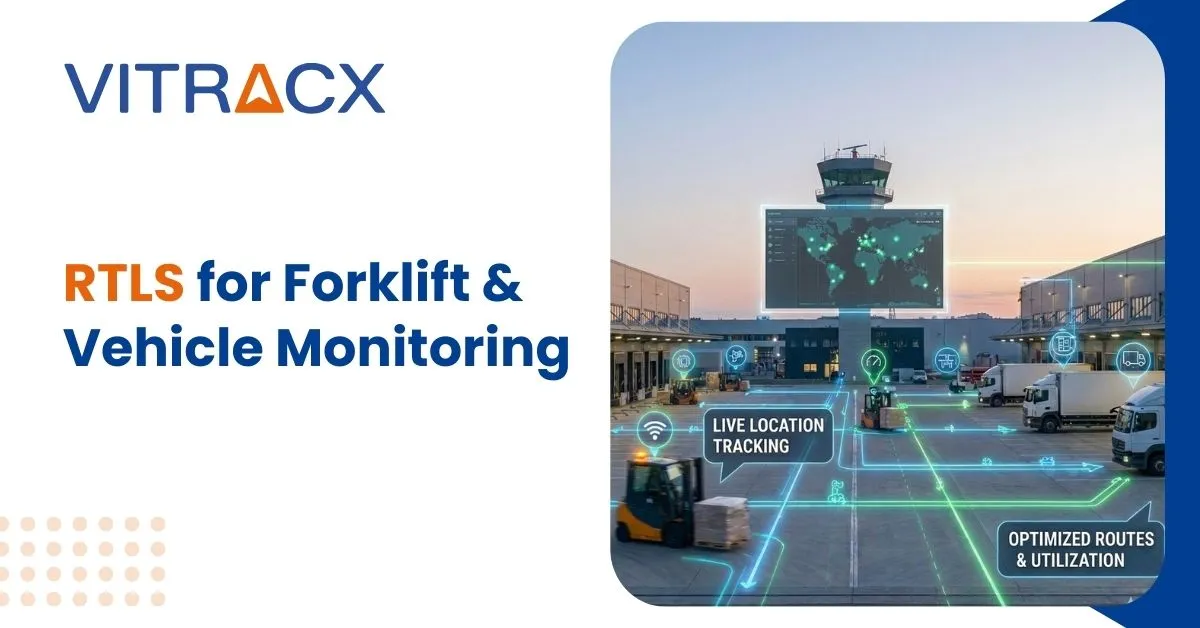
Forklifts and industrial vehicles are the backbone of modern warehouses, manufacturing plants, and logistics facilities…
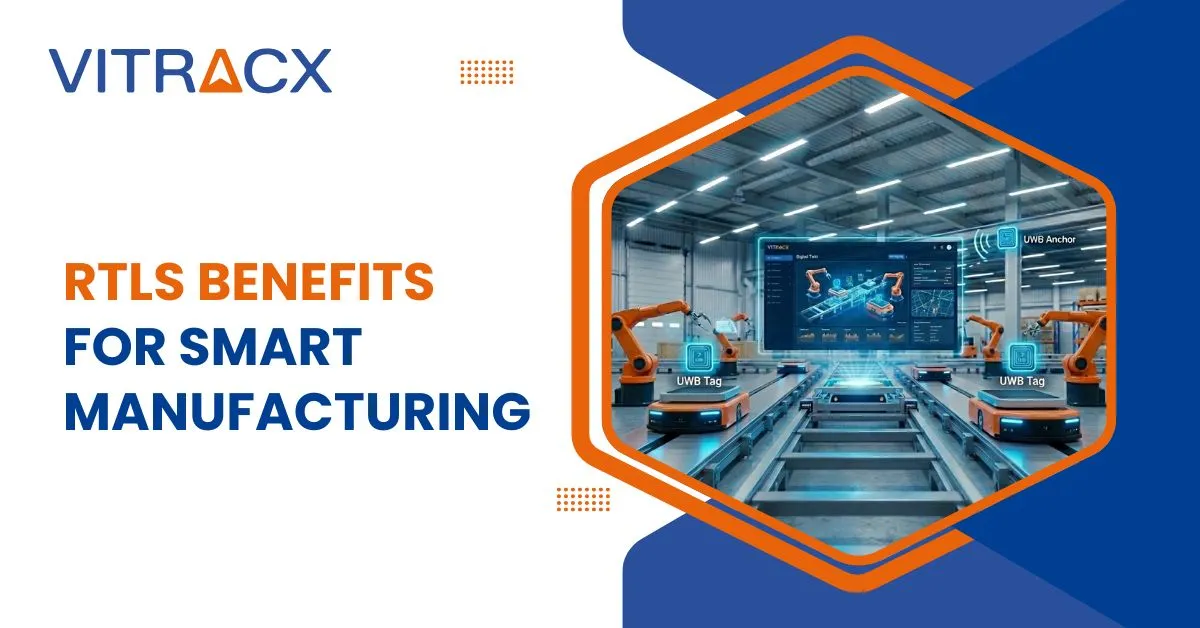
Smart manufacturing is transforming how factories operate by combining automation, real-time data, and intelligent decision-making. At the core of this transformation lies Real-Time Location Systems (RTLS)—a powerful technology that delivers live visibility of assets, materials, tools, and workflows across the manufacturing floor.
By integrating RTLS solutions for smart manufacturing, manufacturers can eliminate inefficiencies, reduce downtime, and gain complete operational control in highly dynamic environments.
What is RTLS in Smart Manufacturing?
RTLS (Real-Time Location System) is a technology that tracks the real-time location and movement of assets using wireless tags, sensors, and software platforms. In smart manufacturing, RTLS enables manufacturers to monitor machines, tools, raw materials, work-in-progress (WIP), and finished goods with precision.
RTLS solutions integrate seamlessly with smart manufacturing systems, supporting automation, Industry 4.0 initiatives, and data-driven production strategies.
Why RTLS is Essential for Smart Manufacturing?
Traditional manufacturing struggles with asset misplacement, production delays, and lack of real-time visibility. RTLS directly addresses these challenges by delivering continuous location intelligence and actionable insights.
Key Challenges Solved by RTLS
- Missing tools or components
- Production line bottlenecks
- Manual tracking errors
- Poor asset utilization
- Delayed maintenance
Top RTLS Benefits for Smart Manufacturing
1. Real-Time Asset Visibility
RTLS provides instant visibility of machines, tools, pallets, and materials across the factory floor. Operators no longer waste time searching for assets, ensuring uninterrupted production flow.
2. Improved Production Efficiency
With RTLS, manufacturers can track WIP movement in real time, identify bottlenecks, and optimize workflows. This leads to faster cycle times and higher throughput.
3. Reduced Downtime and Delays
RTLS enables quick access to required tools and components, minimizing idle time. Automated alerts notify teams when assets are idle, misplaced, or delayed.
4. Enhanced Asset Utilization
RTLS analytics reveal how often assets are used, idle, or underutilized. This helps manufacturers make informed decisions about asset allocation, procurement, and maintenance planning.
5. Predictive Maintenance Support
By tracking machine movement, runtime, and usage patterns, RTLS supports predictive maintenance strategies. Maintenance teams can act before failures occur, improving equipment lifespan.
6. Improved Worker Safety
RTLS improves safety by monitoring the movement of heavy machinery, forklifts, and personnel. Geofencing and real-time alerts help prevent accidents in hazardous zones.
7. Better Inventory & Material Flow Management
RTLS tracks raw materials and finished goods throughout the manufacturing lifecycle. This ensures accurate inventory levels, reduces overstocking, and improves material flow efficiency.
8. Seamless Integration with Smart Manufacturing Systems
RTLS integrates with ERP, MES, WMS, and IoT platforms, enabling centralized data visibility and automated decision-making across production systems.
Looking for real-time tracking across your factory? Contact us and get started with RTLS solutions today.
RTLS Technologies Used in Smart Manufacturing
Different RTLS technologies are used based on accuracy and environment:
- UWB (Ultra-Wideband): High-precision tracking for machines and tools
- BLE AoA / BLE RSSI: Scalable indoor tracking for assets and WIP
- RFID: Identification and zone-level tracking
- IoT Sensors: Environmental and condition monitoring
- GPS + LoRa: Long-range tracking for large manufacturing campuses
Use Cases of RTLS in Smart Manufacturing
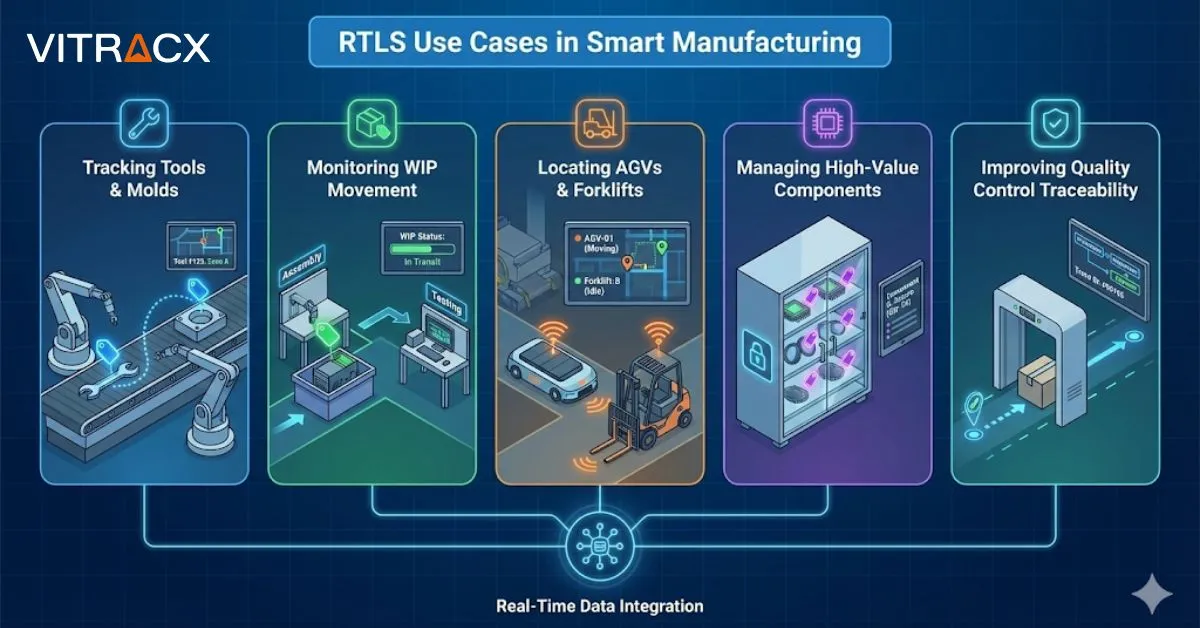
- Tracking tools and molds on production lines
- Monitoring WIP movement between workstations
- Locating AGVs and forklifts in real time
- Managing high-value components
- Improving quality control traceability
How RTLS Enables Industry 4.0?
RTLS acts as a foundational technology for Industry 4.0 by delivering real-time data required for automation, AI-driven analytics, and digital twins. It connects physical assets with digital intelligence, making factories smarter and more responsive.
Frequently Asked Questions
RTLS in smart manufacturing is a real-time location system that tracks assets, tools, materials, and equipment across the factory floor to improve visibility, efficiency, and control.
RTLS improves efficiency by eliminating search time for assets, reducing production delays, optimizing workflows, and providing real-time insights into asset movement and usage.
RTLS is important because smart factories rely on real-time data. RTLS provides live location intelligence that supports automation, data-driven decisions, and Industry 4.0 initiatives.
RTLS can track machines, tools, molds, pallets, work-in-progress items, forklifts, AGVs, raw materials, and finished goods within manufacturing facilities.
Yes, RTLS helps reduce downtime by ensuring tools and materials are always available, identifying bottlenecks, and alerting teams when assets are idle or misplaced.
Conclusion
RTLS solutions play a critical role in enabling smart manufacturing by delivering real-time visibility, improving efficiency, enhancing safety, and supporting data-driven decision-making. Manufacturers adopting RTLS gain a competitive edge through optimized workflows, reduced downtime, and better asset utilization.
As factories continue to evolve toward automation and Industry 4.0, RTLS remains a key enabler of smarter, faster, and more efficient manufacturing operations.
Related Posts