Skip to content
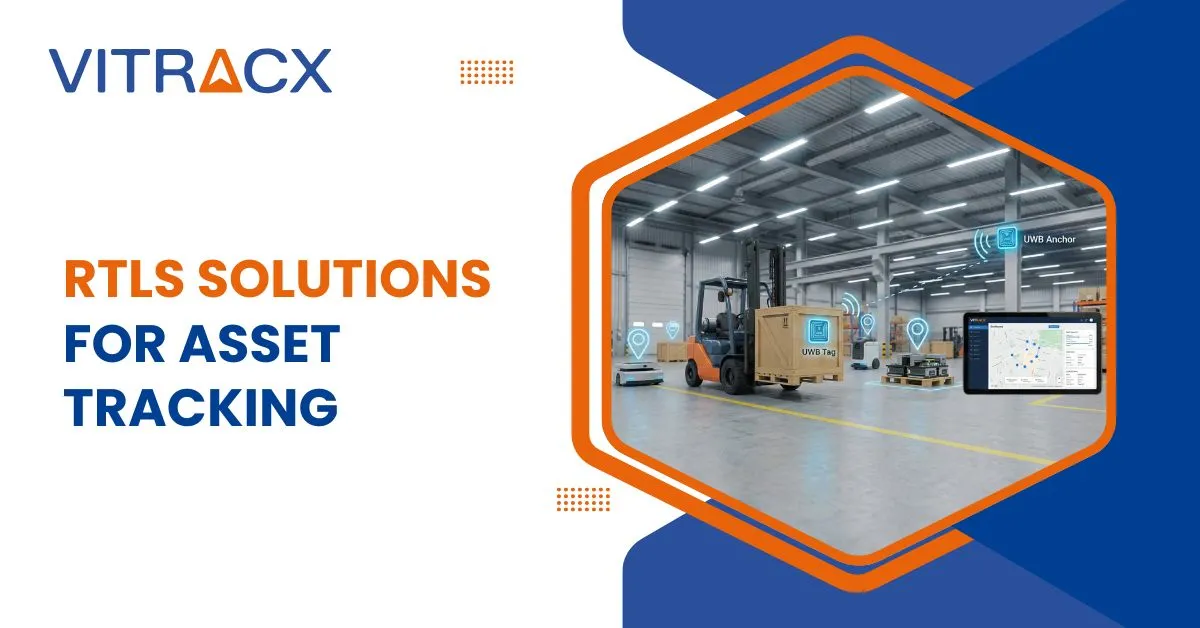
RTLS Solutions for Asset Tracking

Real-time tracking has become essential for any organization managing high-value assets, fast-moving operations, or safety-critical environments. Real-Time Location Systems (RTLS) provide the accuracy, automation, and visibility needed to transform traditional asset tracking into a data-driven, intelligent workflow.

From manufacturing plants and hospitals to warehouses, logistics hubs, and heavy industries, RTLS solutions help businesses reduce losses, eliminate manual errors, and optimize operations with continuous real-time insights.

This in-depth guide explores how RTLS works, why industries rely on it, key technologies involved, and how companies can achieve measurable ROI.

What is RTLS and How Does It Work?

RTLS is a location-tracking infrastructure that monitors the movement and status of assets, people, tools, and equipment across a defined physical space. It uses location sensors, tags, gateways, and analytics software to deliver accurate real-time visibility.

Most RTLS deployments use one or a combination of:

  • UWB (Ultra-Wideband) – for high-precision tracking
  • BLE AoA / RSSI – for affordable and scalable tracking
  • RFID – for zone-based tracking
  • LoRaWAN & IoT Sensors – for long-range environmental monitoring
  • GPS – for outdoor asset visibility

Why Asset Tracking Matters More Than Ever?

Business environments are becoming more dynamic, complex, and interconnected. RTLS addresses major challenges such as:

  1. Asset Misplacement & Loss: Businesses lose thousands of hours every year searching for equipment. RTLS eliminates search time with instant visibility.
  2. Operational Delays & Bottlenecks: Production lines often slow down due to missing tools or materials. Real-time tracking ensures uninterrupted processes.
  3. Compliance & Safety Requirements: Industries like healthcare, pharmaceuticals, aviation, and oil & gas must maintain strict traceability.
  4. Increasing Pressure to Reduce Costs: By reducing manual tracking, downtime, and asset loss, RTLS delivers a measurable financial impact.

How RTLS Enhances Asset Tracking?

Real-Time Visibility Across All Operations

Organizations gain a live map of where every tool, pallet, container, vehicle, or machine is located.

Accurate, Automated Tracking

Eliminates manual documentation and barcode scanning.

Reduced Downtime & Faster Cycle Times

Instant access to tools, materials, and equipment reduces idle time significantly.

Improved Asset Utilization

Many companies underutilize assets without knowing it.
Accurate visibility ensures better planning and fewer unnecessary purchases.

Enhanced Safety & Compliance

RTLS supports audit trails, SOP compliance, and environmental monitoring using IoT sensors.

Predictive Insights Through Analytics

Historical movement patterns help detect:

  • bottlenecks
  • maintenance needs
  • workflow inefficiencies

Looking for smarter ways to manage equipment, tools, and inventory? Get started with Vitracx RTLS solutions and achieve complete visibility across your facilities!

RTLS Technologies for Asset Tracking

RTLS uses a range of advanced wireless technologies to deliver accurate, real-time visibility of assets across any facility. Each technology offers unique strengths based on precision, range, and environment.

1. Ultra-Wideband (UWB)

  • Accuracy up to 10–30 cm
  • Ideal for manufacturing, aerospace, automotive, and heavy equipment
  • Best for high-precision applications

2. BLE AoA (Angle of Arrival)

  • Meter-level accuracy
  • Highly scalable and cost-effective
  • Best for warehouses, hospitals, and offices

3. RFID (Active & Passive)

  • Zone-based tracking
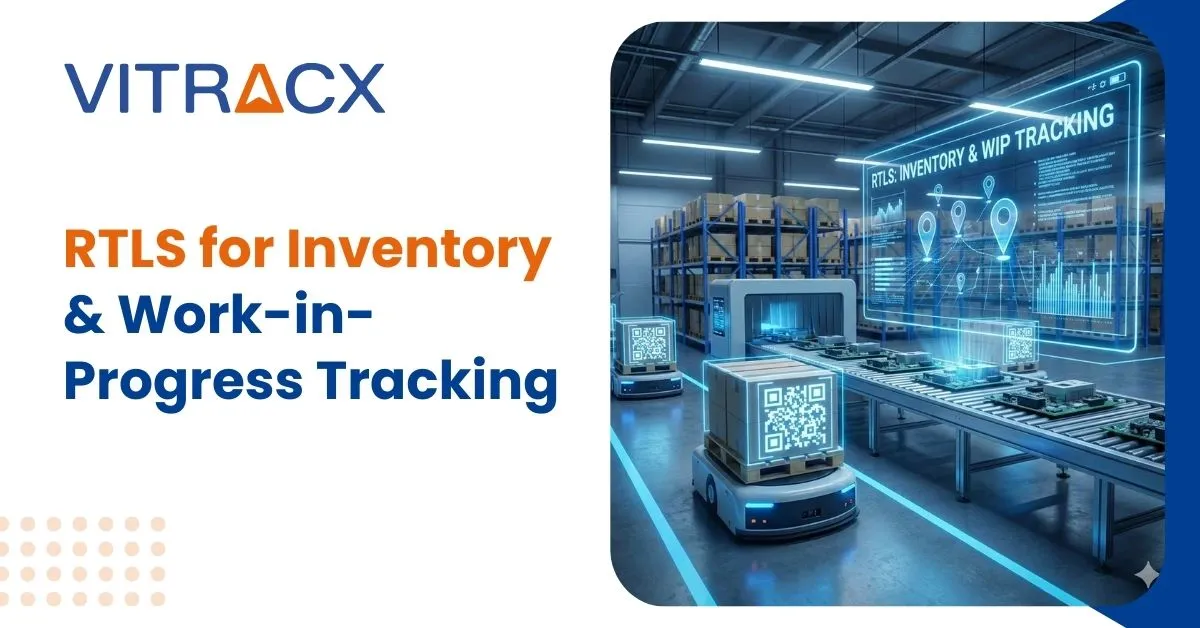
  • Suitable for inventory, pallets, and tools

4. LoRaWAN

  • Long-range communication
  • Perfect for oil & gas, chemical plants, and outdoor asset tracking

5. GPS / GNSS

  • Outdoor tracking over large areas

Industries Using RTLS for Asset Tracking

A wide range of industries rely on RTLS to streamline workflows, reduce downtime, and maintain accurate asset traceability. Here’s how different sectors benefit from real-time tracking.

Manufacturing (Automotive, Electronics, Steel)

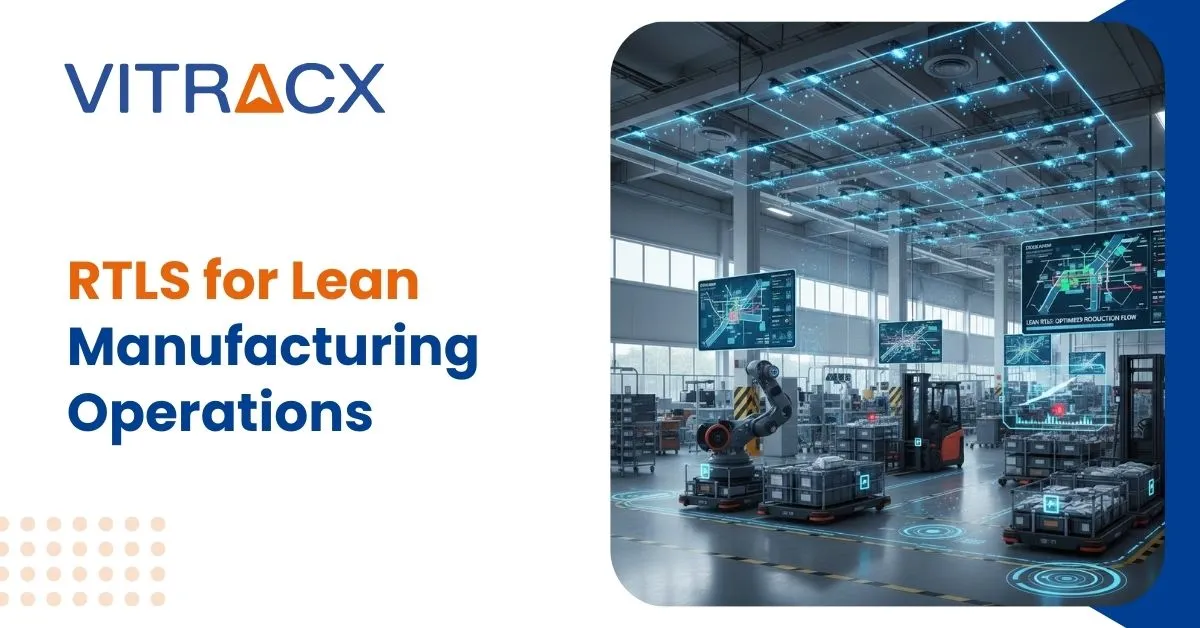
  • Track tools, WIP goods, containers, AGVs
  • Monitor automated workflows
  • Prevent line stoppages

Warehousing & Logistics

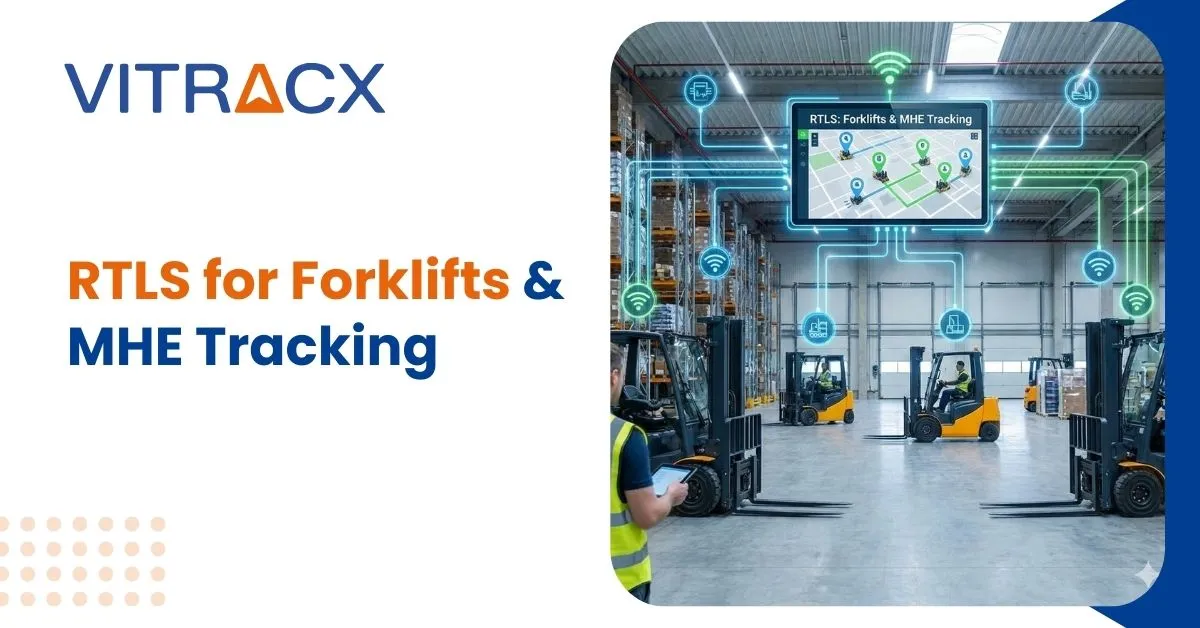
  • Real-time pallet, forklift, and inventory tracking
  • Better space optimization
  • Lower labor and search time

Healthcare & Hospitals

  • Track life-saving equipment, wheelchairs, pumps, beds
  • Ensure patient safety
  • Reduce equipment rental costs

Oil & Gas / Heavy Industries

  • Track field equipment
  • Monitor assets in hazardous zones
  • Enhance safety compliance

Aerospace & MRO

  • Maintain traceability of aircraft parts
  • Improve turnaround times
  • Support regulatory audits

How RTLS Generates Strong ROI?

Companies achieve ROI through:

  • 30–50% reduced search time
  • Lower equipment losses and theft
  • Reduced downtime and maintenance delays
  • Improved labor productivity
  • Optimized asset utilization

Future Trends in RTLS Asset Tracking

  • AI-powered predictive analytics
  • Integration with digital twins
  • 5G-enabled RTLS
  • Worker safety monitoring
  • Hyper-accurate UWB for robotics and automation

Frequently Asked Questions

RTLS is a technology that allows businesses to track the live location and movement of assets using wireless tags, sensors, and software. It provides instant visibility of tools, equipment, inventory, and vehicles inside any facility.

RTLS creates a digital map that shows where each asset is at any moment. This removes guesswork, minimizes search time, and ensures teams always know the status and location of critical equipment.

RTLS is widely used in manufacturing, logistics, warehousing, healthcare, automotive, aerospace, heavy equipment, and oil & gas—any industry that depends on efficient asset movement and high-value tools.

RTLS platforms use technologies like UWB, BLE, RFID, GPS, LoRaWAN, and IoT sensors. Each technology offers different levels of accuracy, coverage, and cost efficiency depending on operational needs.

Yes. By preventing asset loss, reducing search time, improving asset utilization, and eliminating manual tracking errors, RTLS helps organizations significantly cut operational expenses.

Conclusion

Real-time asset tracking empowers organizations to operate smarter, faster, and safer. With RTLS, businesses gain continuous visibility, traceability, and insights—driving productivity and efficiency across every department.

Back To Top