In today’s fast-moving supply chain environment, businesses need real-time visibility, automation, and data accuracy to stay competitive. While RTLS (Real-Time Location Systems) enable live tracking of assets, equipment, and people, their full potential is realized only through RTLS integration with ERP & WMS systems.
By combining RTLS solutions, ERP integration, and WMS integration, organizations can automate warehouse operations, eliminate manual data entry, and gain complete operational transparency across warehouses, manufacturing plants, and logistics facilities.
What Is RTLS Integration with ERP & WMS Systems?
RTLS integration with ERP and WMS systems connects real-time location data with enterprise software platforms to ensure that asset movement, inventory status, and workflow updates are reflected instantly.
This integration enables:
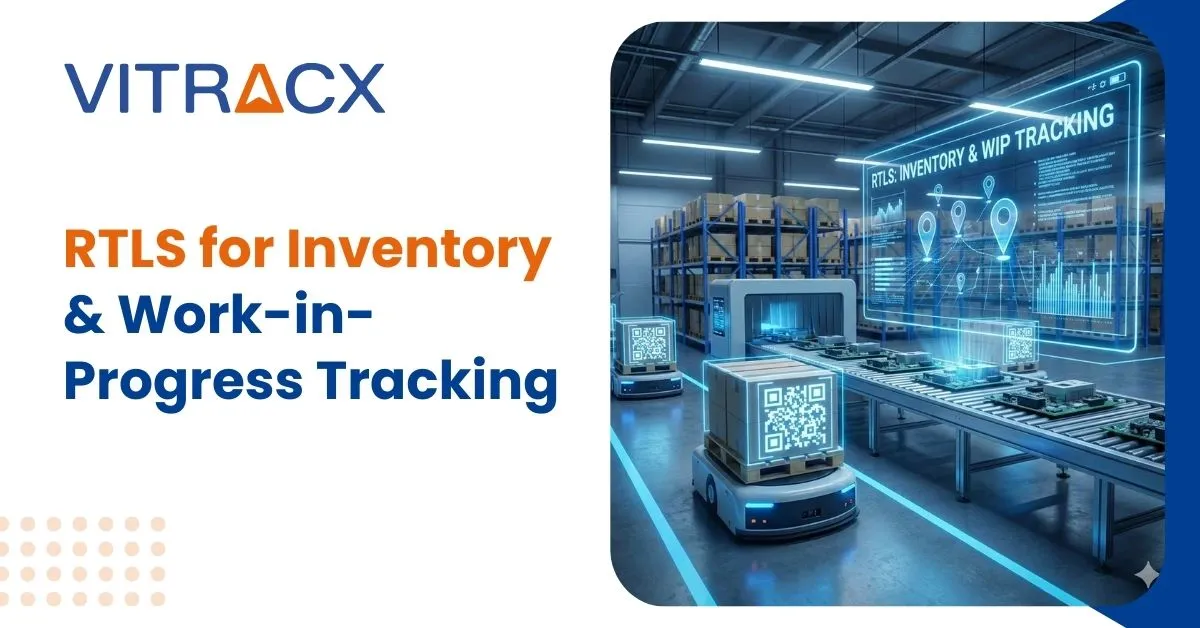
- Real-time inventory tracking
- Automated warehouse updates
- Accurate asset lifecycle management
- Seamless warehouse automation
Why RTLS Integration with ERP & WMS Systems Is Important?
Traditional ERP systems and warehouse management systems (WMS) depend heavily on barcode scanning, manual updates, or delayed data synchronization. This leads to inefficiencies and blind spots.
Challenges Without RTLS Integration
- Inaccurate inventory data
- Delayed order fulfilment
- Manual tracking errors
- Low asset utilization
- Limited warehouse visibility
RTLS ERP WMS integration solves these issues by enabling real-time data flow between physical assets and digital systems.
How RTLS Integration Works?
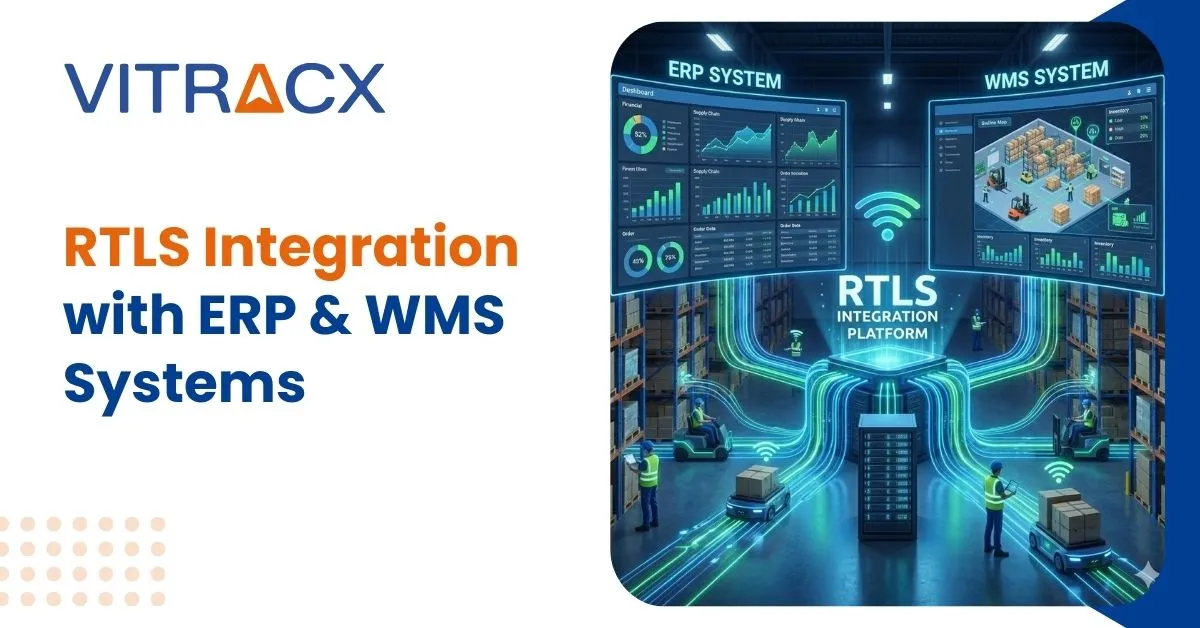
RTLS integration uses APIs and middleware to synchronize real-time location data with enterprise platforms.
RTLS Integration Workflow:
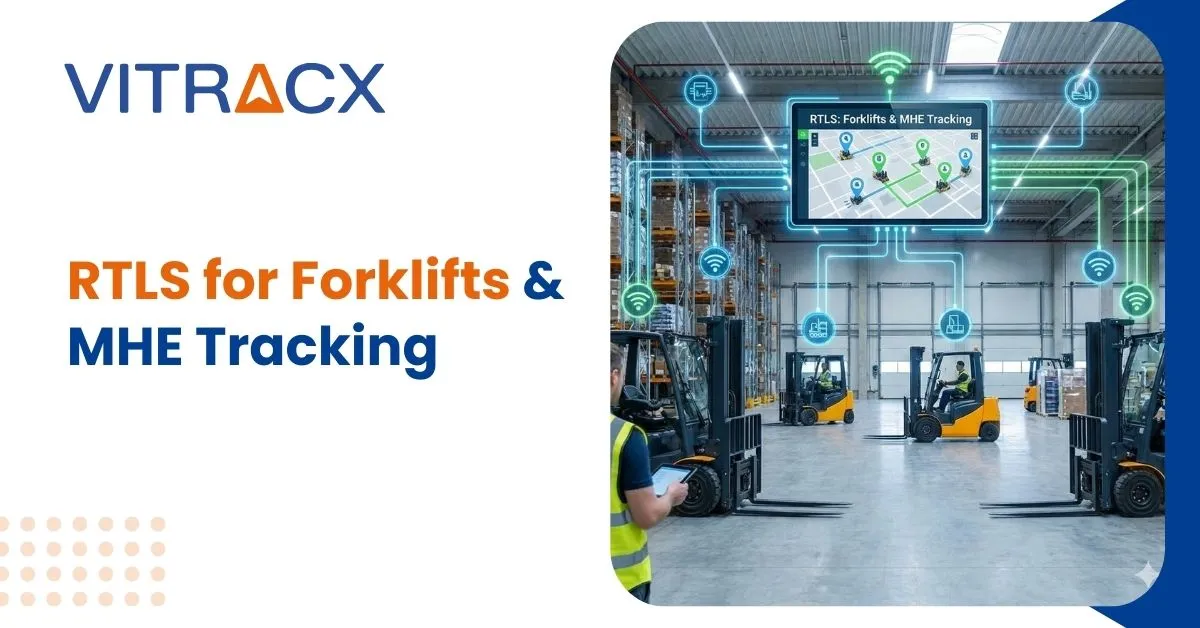
- RTLS tracks assets, pallets, forklifts, and equipment in real time
- Location data is processed by the RTLS engine
- Data is transferred via APIs to ERP and WMS software
- Systems update inventory, workflows, and dashboards automatically
This enables real-time operational intelligence and warehouse automation solutions.
Benefits of RTLS Integration with ERP & WMS
RTLS integration with ERP & WMS systems delivers RTLS-powered real-time visibility, seamless automation, and accurate data flow, helping organizations optimize inventory, workflows, and overall operational efficiency.
- Real-Time Inventory Accuracy
RTLS-enabled inventory tracking updates ERP and WMS systems instantly, eliminating discrepancies and manual reconciliation.
- Faster Order Fulfilment
Precise location data allows WMS systems to optimize picking, packing, and dispatching.
- Automated Asset Lifecycle Management
ERP systems track asset movement, usage history, and availability automatically.
- Reduced Manual Data Entry
RTLS eliminates barcode scanning and spreadsheet updates, enabling warehouse process automation.
- Improved Workforce Productivity
RTLS data enables smarter task allocation based on real-time asset and worker availability.
- Smarter Data-Driven Decisions
Integrated dashboards provide unified insights into warehouse and supply chain operations.