
Forklifts and Material Handling Equipment (MHE) are the backbone of warehouse and industrial operations. But…
- Product Guide
- 9 minute read
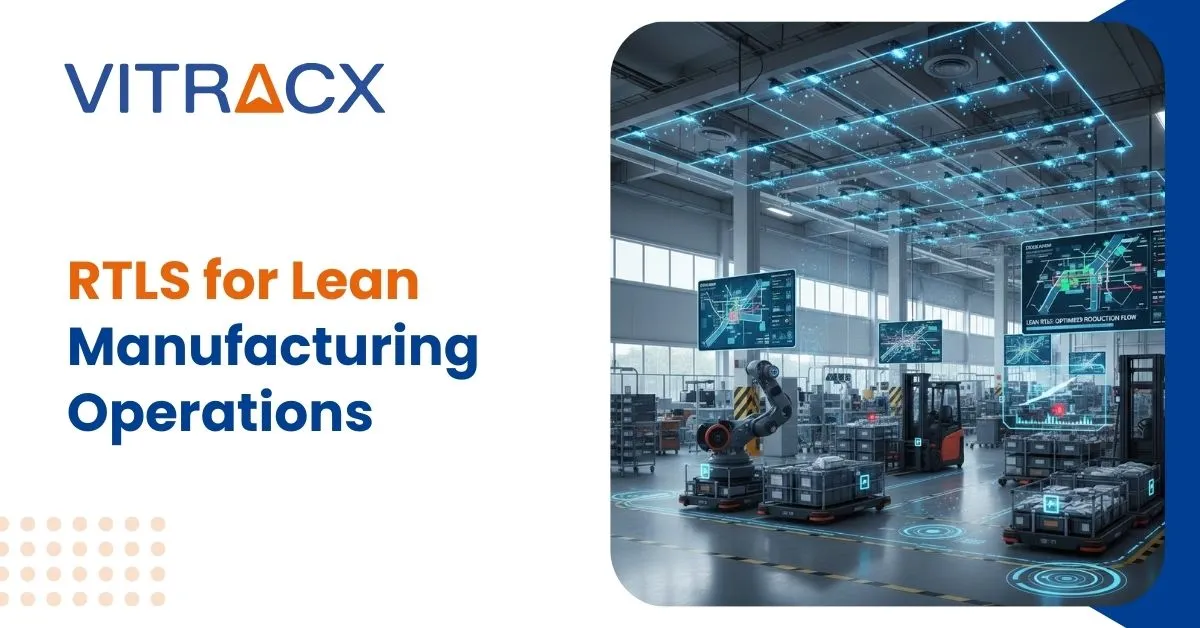
Lean manufacturing focuses on eliminating waste, improving productivity, and maximizing operational efficiency. However, many manufacturers still struggle with limited visibility into asset location, workflow bottlenecks, and equipment utilization. This is where RTLS solutions (Real-Time Location Systems) play a critical role in enabling lean manufacturing operations.
RTLS solutions provide real-time visibility into the location and movement of assets, materials, tools, and personnel inside manufacturing facilities. By leveraging technologies such as UWB, RFID, and BLE, manufacturers can optimize workflows, reduce downtime, and eliminate operational waste. As a result, RTLS solutions have become a key component of modern lean manufacturing and Industry 4.0 strategies.
In this guide, you’ll learn how RTLS solutions support lean manufacturing, improve productivity, and enable data-driven operational excellence.
What is RTLS in Manufacturing?
Manufacturing operations require continuous monitoring of assets, equipment, and materials to maintain efficiency and avoid delays. Without proper tracking systems, production teams waste valuable time locating essential resources, which negatively impacts productivity. Operational visibility improves significantly when manufacturers adopt RTLS solutions to track and monitor the real-time location of equipment, inventory, and personnel, providing complete operational transparency. RTLS solutions use wireless technologies such as Ultra-Wideband (UWB), RFID, Bluetooth Low Energy (BLE), and GPS to provide accurate location tracking within manufacturing environments. These systems help manufacturers optimize workflows, improve productivity, and reduce operational inefficiencies.
How RTLS Solutions Work?
Modern manufacturing environments require automated tracking systems to ensure operational efficiency. Accurate tracking becomes possible when RTLS solutions use wireless tags, sensors, and software platforms to provide continuous location data and operational insights, enabling real-time monitoring and decision-making.
RTLS solutions include the following components:
- Tags: Attached to equipment, tools, or materials
- Anchors/Readers: Detect signals from tracking tags
- Software Platform: Displays real-time asset location and analytics
This system provides manufacturers with complete operational visibility.
Common RTLS Technologies Used in Manufacturing
Manufacturers require different tracking technologies depending on operational needs and accuracy requirements. Tracking accuracy improves significantly when RTLS solutions utilize advanced technologies such as UWB, RFID, BLE, and GPS to provide reliable real-time location tracking, ensuring efficient manufacturing operations.
- Ultra-Wideband (UWB) – High precision tracking
- RFID – Inventory and asset tracking
- Bluetooth Low Energy (BLE) – Indoor asset tracking
- GPS – Outdoor asset tracking
What is Lean Manufacturing?
Lean manufacturing is a methodology focused on improving efficiency while reducing waste and operational inefficiencies. However, identifying inefficiencies becomes challenging without proper tracking systems and real-time data. Manufacturing efficiency improves significantly when RTLS solutions provide real-time operational visibility, helping manufacturers identify waste, improve workflows, and enhance productivity, enabling lean manufacturing transformation.
Lean manufacturing focuses on eliminating waste such as unnecessary movement, idle time, excess inventory, and inefficient workflows.
The 8 Types of Lean Manufacturing Waste
Operational waste reduces manufacturing efficiency and increases operational costs. Waste reduction becomes more effective when manufacturers use RTLS solutions to identify inefficiencies and optimize operational workflows using real-time location data.
| Lean Waste Type | Manufacturing Example | How RTLS Solutions Help |
| Transportation | Excess material movement | Optimizes material movement |
| Waiting | Workers waiting for tools | Provides instant asset location |
| Motion | Searching for equipment | Eliminates search time |
| Inventory | Excess inventory storage | Enables real-time inventory tracking |
| Overproduction | Producing excess goods | Improves production planning |
| Overprocessing | Unnecessary process steps | Identifies process inefficiencies |
| Defects | Quality issues | Tracks process flow |
| Underutilized talent | Poor workforce allocation | Provides workforce insights |
By reducing these wastes, RTLS solutions help manufacturers achieve lean operational goals.
How RTLS Solutions Support Lean Manufacturing Principles?
Lean manufacturing depends on accurate operational data and real-time insights to improve efficiency and eliminate waste. Manufacturing optimization becomes easier when RTLS solutions provide real-time tracking and operational intelligence, enabling manufacturers to improve productivity and reduce inefficiencies, supporting lean manufacturing goals.
Real-Time Asset Tracking
Manufacturing productivity suffers when workers spend excessive time searching for tools or equipment. Operational efficiency improves significantly when manufacturers use RTLS solutions to instantly locate assets, equipment, and materials in real time, ensuring smooth and uninterrupted workflows.
Benefits include:
- Faster asset location
- Reduced production delays
- Improved operational efficiency
Eliminating Operational Waste
Operational waste reduces productivity and increases manufacturing costs. Waste reduction becomes easier when RTLS solutions provide real-time visibility into asset movement, equipment utilization, and workflow bottlenecks, enabling manufacturers to eliminate inefficiencies.
Benefits include:
- Reduced equipment downtime
- Improved resource utilization
- Reduced operational waste
Improving Workflow Efficiency
Efficient workflows are essential for achieving manufacturing productivity and operational excellence. Workflow optimization becomes more effective when RTLS solutions provide real-time insights into production processes and material movement, enabling manufacturers to identify bottlenecks and improve efficiency.
Benefits include:
- Faster production cycles
- Optimized workflows
- Reduced operational delays
Increasing Workforce Productivity
Workforce productivity directly impacts manufacturing performance and operational efficiency. Workforce optimization improves when RTLS solutions provide real-time workforce tracking and performance insights, helping manufacturers improve workforce utilization.
Benefits include:
- Increased workforce productivity
- Improved workforce allocation
- Reduced idle time
Enabling Data-Driven Decision Making
Accurate data is essential for improving operational efficiency and manufacturing performance. Better decision-making becomes possible when RTLS solutions provide real-time operational insights and analytics, enabling manufacturers to optimize workflows and improve productivity.
Benefits include:
- Improved operational planning
- Real-time performance monitoring
- Better decision-making
Get complete visibility into your assets, workforce, and workflows. Contact us now to start your lean manufacturing transformation journey.
Benefits of RTLS Solutions for Lean Manufacturing
Manufacturers aim to improve efficiency, reduce operational costs, and increase productivity. Operational performance improves significantly when RTLS solutions provide real-time visibility, asset tracking, and workflow optimization, enabling lean manufacturing success.
Major benefits include:
- Real-time asset visibility
- Reduced downtime
- Improved productivity
- Reduced operational waste
- Improved workflow efficiency
- Improved inventory management
- Enhanced operational efficiency
RTLS Solutions Use Cases in Lean Manufacturing
Manufacturing environments involve multiple moving assets and operational processes that require continuous monitoring. Operational efficiency improves significantly when RTLS solutions enable real-time tracking of equipment, tools, materials, and workforce, improving asset management and workflow efficiency.
| Use Case | Description | Lean Manufacturing Benefit |
| Tool Tracking | Locate tools instantly | Reduces motion waste |
| Asset Tracking | Track equipment location | Improves utilization |
| Inventory Tracking | Monitor inventory in real time | Prevents overproduction |
| Worker Tracking | Monitor workforce movement | Improves productivity |
| Equipment Tracking | Track machine usage | Reduces downtime |
| Material Tracking | Track material flow | Improves workflow efficiency |
These use cases demonstrate how RTLS solutions enable lean manufacturing optimization.
How RTLS Solutions Improve Overall Factory Efficiency?
Factory efficiency depends on real-time visibility, workflow optimization, and operational intelligence. Manufacturing efficiency improves significantly when RTLS solutions provide real-time operational visibility, enabling manufacturers to improve productivity and reduce inefficiencies, supporting lean manufacturing goals.
Benefits include:
- Improved operational visibility
- Faster production cycles
- Improved asset utilization
- Reduced operational delays
Technologies Used in RTLS Solutions
Manufacturing environments require accurate and reliable tracking technologies to ensure operational efficiency. Tracking accuracy improves significantly when RTLS solutions use advanced wireless technologies such as UWB, RFID, BLE, and GPS, enabling precise asset tracking.
| Technology | Accuracy | Best Use Case |
| UWB | Very High (10–30 cm) | Precision tracking |
| RFID | Medium | Inventory tracking |
| BLE | Medium | Asset tracking |
| GPS | Low Indoor | Outdoor tracking |
Selecting the right RTLS technology is essential for achieving optimal manufacturing results.
How to Implement RTLS Solutions in Lean Manufacturing?
Successful implementation requires proper planning and execution. Operational efficiency improves significantly when manufacturers implement RTLS solutions using a structured deployment approach, ensuring maximum operational benefits.
Implementation steps:
- Identify operational inefficiencies
- Define tracking objectives
- Select appropriate RTLS technology
- Deploy infrastructure
- Implement software
- Optimize workflows
Future of RTLS Solutions in Lean Manufacturing
RTLS solutions are becoming essential components of Industry 4.0 and smart manufacturing environments. As factories adopt digital transformation strategies, RTLS solutions will play a critical role in enabling automation, real-time monitoring, and intelligent decision-making.
Future Trends Include:
- Smart factory integration
- AI-powered analytics
- Predictive maintenance
- Digital twins
- Fully automated manufacturing
RTLS solutions will continue to transform manufacturing operations by improving efficiency and enabling smarter production environments.
Frequently Asked Questions
RTLS solutions track the real-time location of assets, tools, materials, and personnel in manufacturing facilities. This improves visibility, reduces waste, and enhances operational efficiency.
RTLS solutions improve efficiency by providing real-time asset tracking, identifying workflow bottlenecks, reducing downtime, and optimizing resource utilization.
Key benefits include improved productivity, real-time visibility, reduced operational waste, better asset utilization, and enhanced workflow efficiency.
RTLS solutions are used in automotive, electronics, healthcare, logistics, and industrial manufacturing sectors.
Yes, RTLS solutions are essential components of Industry 4.0, enabling smart factories through real-time tracking, automation, and analytics.
Conclusion
RTLS solutions provide real-time visibility, improve productivity, and reduce operational waste, making them essential tools for lean manufacturing. By enabling real-time asset tracking, workflow optimization, and data-driven decision-making, RTLS solutions help manufacturers achieve higher efficiency and operational excellence. Manufacturers implementing RTLS solutions can significantly improve production efficiency, reduce costs, and accelerate their digital transformation journey.
Importance of Lean ManufacturingLean Management in OperationsReal Time Location ServicesReal Time Location TrackingReal Time Vehicle Tracking SystemReal Time Vehicle Tracking System Project
Related Posts
Inventory gaps and delayed production updates are two of the biggest reasons businesses lose time,…
Industrial automation is no longer limited to machines doing repetitive work. Today, success in automation…