Downtime is one of the most expensive problems in manufacturing and industrial operations. Whether caused by machine breakdowns, missing tools, delayed maintenance, or inefficient workflows, downtime directly impacts productivity, revenue, and customer satisfaction. To stay competitive in today’s Industry 4.0 landscape, manufacturers must adopt intelligent technologies that provide real-time operational visibility. This is where Real Time Location System technology plays a transformative role. By enabling real-time asset tracking, equipment monitoring, and workforce visibility, RTLS helps organizations reduce unplanned downtime, improve equipment utilization, and enhance overall factory efficiency.
What is Downtime in Manufacturing?
Downtime in manufacturing refers to any period when production stops or slows due to equipment failure, maintenance, material shortages, or operational inefficiencies. Downtime is generally categorized into:
- Planned Downtime: Scheduled maintenance or system upgrades
- Unplanned Downtime: Unexpected machine failures or breakdowns
- Operational Downtime: Delays caused by workflow inefficiencies or missing assets
Unplanned downtime is particularly costly. It leads to production losses, increased maintenance costs, missed deadlines, and reduced operational efficiency. Without accurate real-time data, identifying the root cause of downtime becomes difficult.
Reducing downtime requires better visibility — and this is where Real Time Location System technology provides a significant advantage.
What is RTLS Technology?
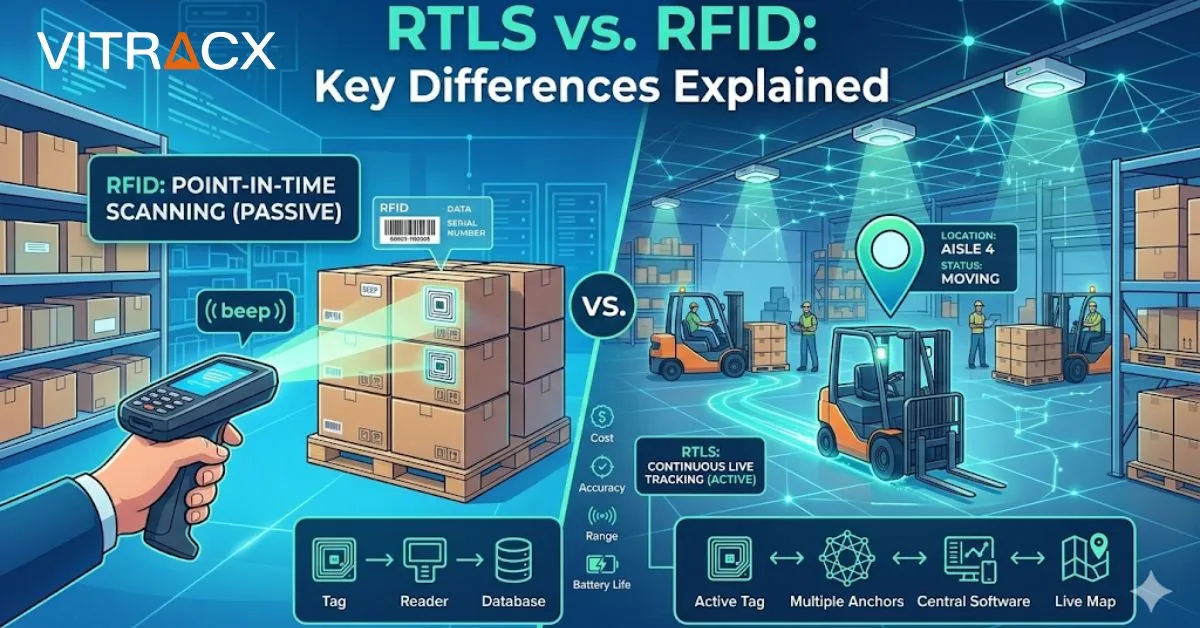
A Real Time Location System (RTLS) uses wireless tracking technologies such as Ultra-Wideband (UWB), RFID, Bluetooth Low Energy (BLE), and GPS to monitor the real-time location of objects and people within industrial environments.
RTLS systems typically include:
- Tags: Attached to assets or equipment
- Anchors/Readers: Installed across the facility
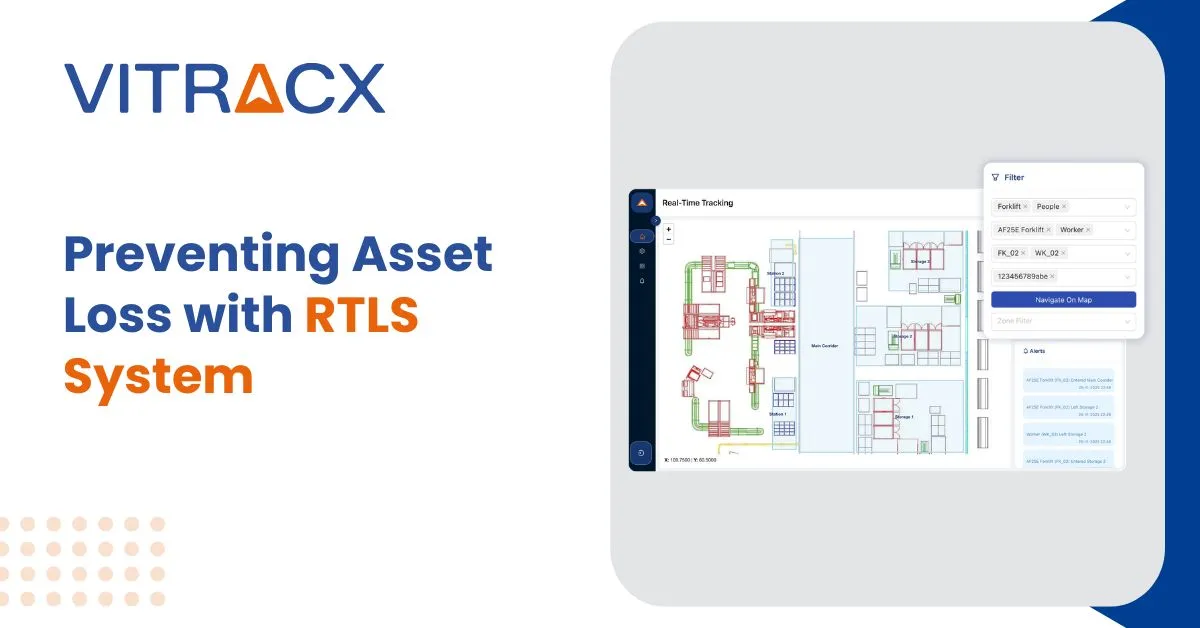
- Software Dashboard: Displays real-time tracking data and analytics
By delivering accurate location intelligence, Real Time Location System improves asset visibility, speeds up issue resolution, and supports predictive maintenance strategies.
How RTLS Technology Reduces Downtime?
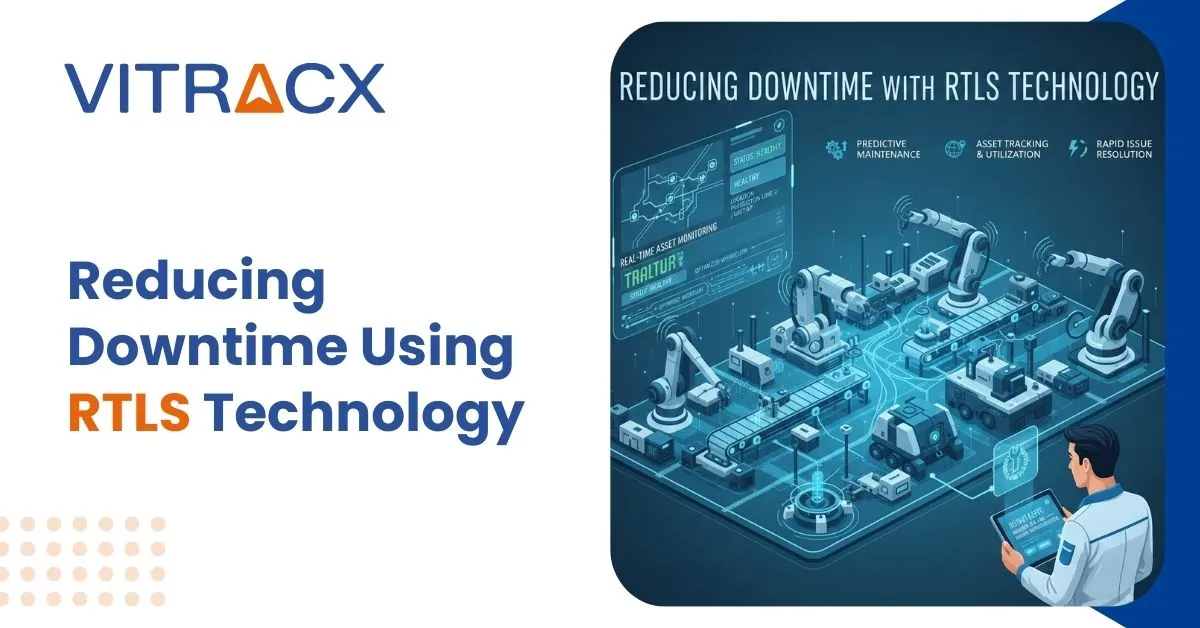
RTLS technology reduces downtime by providing real-time visibility into asset movement, equipment usage, and operational workflows. Reducing downtime requires early detection of issues, faster response times, and improved maintenance planning. Real Time Location System addresses these challenges through real-time tracking and actionable insights.
Real-Time Equipment Tracking
When machines or tools are misplaced, maintenance teams waste valuable time searching for them. Real Time Location System eliminates search time by providing real-time location data. Maintenance teams can quickly locate equipment, reducing Mean Time to Repair (MTTR) and minimizing production interruptions.
Benefits include:
- Faster fault resolution
- Reduced search time
- Improved maintenance efficiency
Predictive Maintenance Support
By analyzing asset usage patterns, manufacturers can identify unusual activity or abnormal machine behavior before failures occur. Real Time Location System data can integrate with maintenance management systems to trigger preventive maintenance alerts. This proactive approach helps reduce unexpected breakdowns and extend equipment lifespan.
Faster Fault Detection
When equipment remains idle longer than expected or moves outside designated zones, Real Time Location System systems can trigger alerts. This enables faster issue identification and quicker response from maintenance teams. As a result, downtime duration is significantly reduced.
Improving Equipment Utilization
RTLS technology improves equipment utilization by tracking machine activity and identifying underused assets. Many facilities experience downtime due to uneven workload distribution or underutilized machines. Real Time Location System provides usage data that allows managers to optimize production planning and allocate resources effectively. Improved equipment utilization leads to higher productivity and fewer operational delays.
Workforce and Workflow Optimization
Real Time Location System solutions enhance workforce productivity and workflow efficiency to reduce operational downtime. Real Time Location System enables real-time tracking of workforce movement and material flow. Managers can identify bottlenecks, optimize task assignments, and ensure faster maintenance response. This improves workflow automation and reduces delays caused by inefficient processes.
Key Benefits of RTLS for Downtime Reduction
RTLS technology delivers measurable benefits that directly impact downtime reduction and operational efficiency.
Major benefits include:
- Reduced unplanned downtime
- Improved Mean Time to Repair (MTTR)
- Enhanced equipment visibility
- Faster maintenance response
- Improved predictive maintenance
- Increased overall equipment effectiveness (OEE)
- Reduced operational costs
By implementing Real Time Location System technology, manufacturers can significantly improve production reliability and reduce costly interruptions.
RTLS Downtime Reduction Use Cases
Real Time Location System deployments across industries demonstrate significant downtime reduction results.
| Use Case |
Downtime Challenge |
RTLS Solution |
| Tool Tracking |
Missing tools delay production |
Real-time tool location |
| Machine Tracking |
Idle or malfunctioning equipment |
Usage monitoring & alerts |
| Forklift Tracking |
Transport bottlenecks |
Route optimization |
| Maintenance Dispatch |
Slow technician response |
Nearest staff allocation |
| Spare Parts Tracking |
Parts unavailable during repairs |
Real-time inventory visibility |