Forklifts and industrial vehicles are the backbone of modern warehouses, manufacturing plants, and logistics facilities. However, managing their movement, utilization, and safety remains a major operational challenge. Accidents, idle time, congestion, and lack of real-time visibility often lead to productivity loss and safety risks.
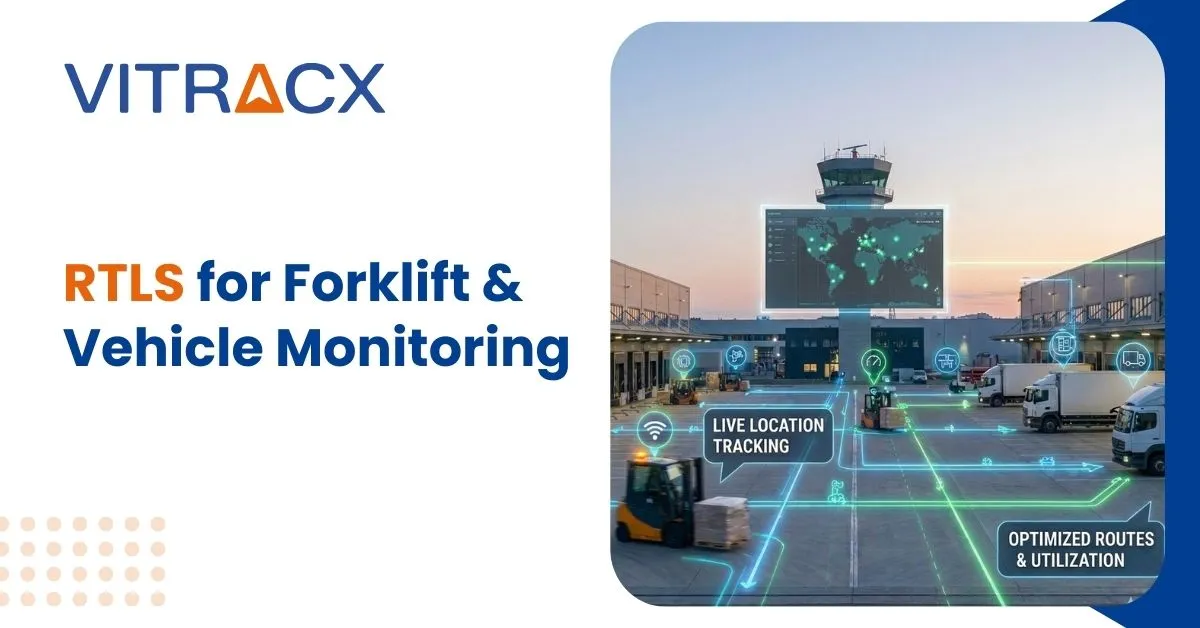
This is where RTLS for forklift and vehicle monitoring delivers a transformative impact. By providing real-time location data, movement analytics, and automated alerts, RTLS solutions enable businesses to monitor forklifts and vehicles accurately, improve operational efficiency, and create safer industrial environments.
What Is RTLS for Forklift & Vehicle Monitoring?
RTLS (Real-Time Location System) for forklift and vehicle monitoring uses wireless technologies to track the real-time location, movement, speed, and behavior of forklifts, AGVs, trucks, and other industrial vehicles within a facility.
RTLS systems typically use:
- UWB (Ultra-Wideband)
- BLE (Bluetooth Low Energy)
- RFID
- Wi-Fi
- IoT sensors
These technologies work together to deliver continuous real-time vehicle visibility, allowing warehouse managers to make informed, data-driven decisions.
Why Forklift & Vehicle Monitoring Is Critical?
Forklifts and industrial vehicles operate in fast-paced, high-risk environments. Without real-time monitoring, organizations face challenges such as:
- Vehicle collisions and safety incidents
- Inefficient routing and congestion
- Idle forklifts and underutilized assets
- Unauthorized vehicle movement
- Poor visibility of vehicle availability
RTLS forklift monitoring systems directly address these challenges by enabling live tracking and intelligent analytics.
How RTLS Works for Forklift & Vehicle Monitoring?
RTLS uses a combination of hardware and software to monitor vehicles in real time:
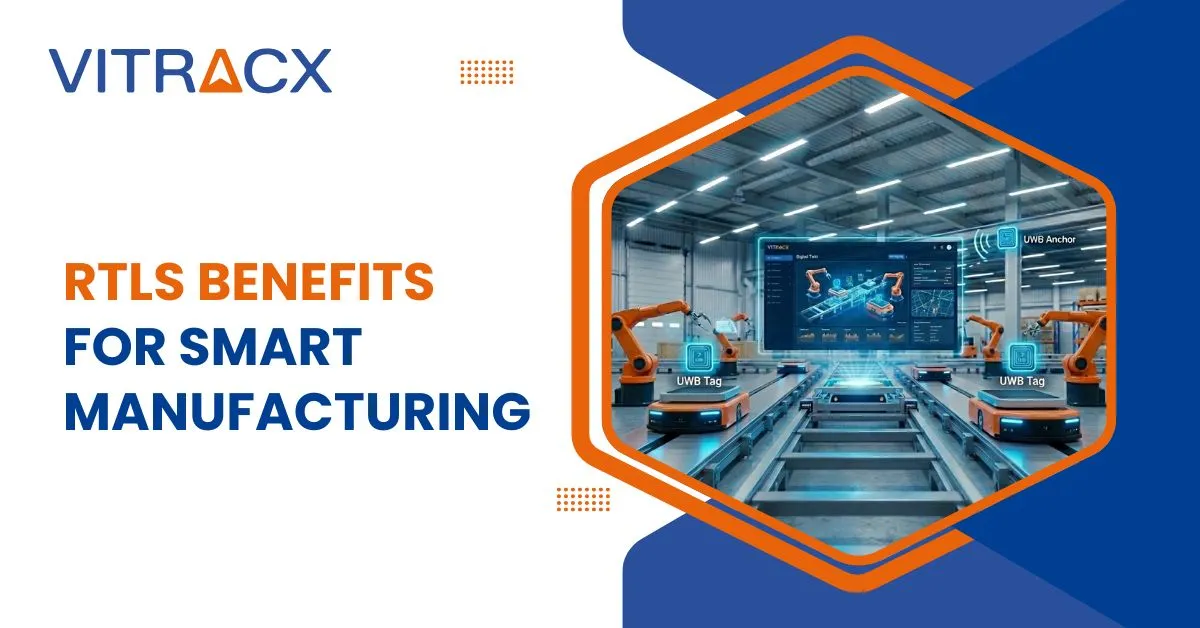
- RTLS tags are mounted on forklifts or vehicles
- Anchors or receivers capture tag signals across the facility
- Location engines calculate precise positions
- Dashboards visualize movement, speed, and status
- Alerts and reports enable proactive action
This infrastructure enables accurate forklift tracking, vehicle movement analysis, and safety enforcement.
Benefits of RTLS for Forklift & Vehicle Monitoring
1. Real-Time Forklift Tracking
RTLS provides instant visibility into forklift location, direction, and status. Operators and supervisors always know where vehicles are, eliminating search time and delays.
2. Enhanced Safety and Accident Prevention
RTLS improves safety by:
- Monitoring vehicle speed
- Enforcing geofencing in restricted zones
- Triggering alerts for near-collision events
- Tracking pedestrian-vehicle proximity
This significantly reduces workplace accidents and improves compliance.
3. Improved Vehicle Utilization
RTLS analytics show which forklifts are active, idle, or underutilized. This helps optimize fleet size and reduce unnecessary capital expenditure.
4. Reduced Congestion and Smarter Routing
By analyzing movement patterns, RTLS helps identify congested paths and inefficient routes. Warehouses can redesign layouts or optimize traffic flow.
5. Faster Material Handling Operations
With real-time vehicle availability and location data, tasks are assigned more efficiently, speeding up pallet movement and order fulfillment.