Skip to content
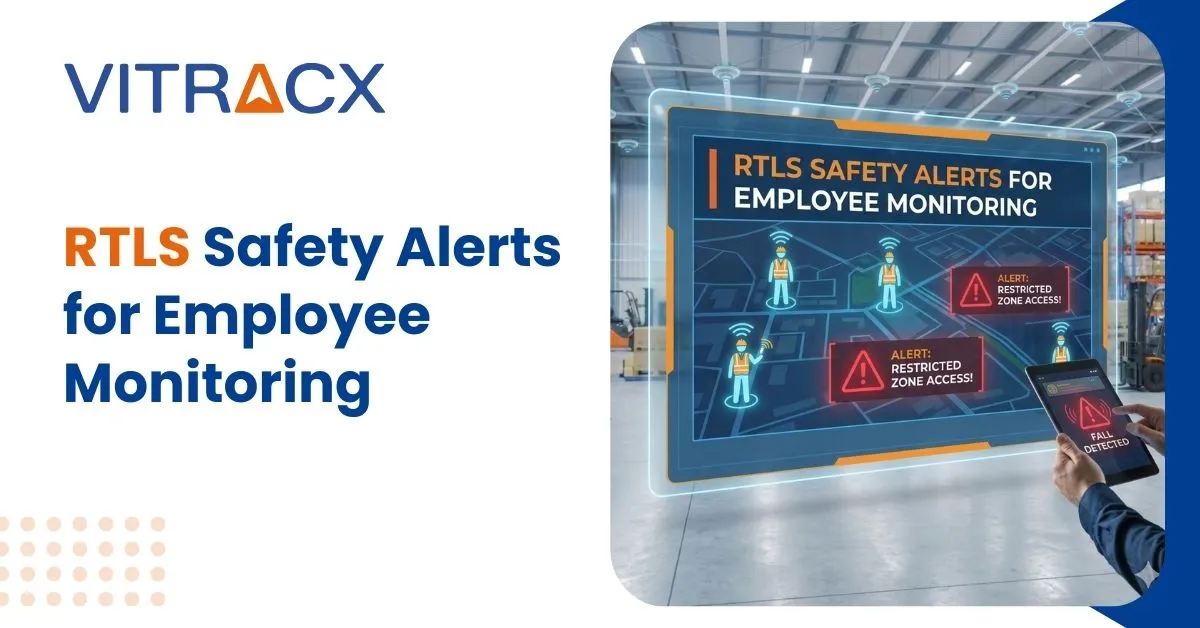
RTLS Safety Alerts for Employee Monitoring

Workplace safety is no longer limited to PPE and manual supervision. Industries like manufacturing, logistics, healthcare, and construction now rely on automated safety intelligence where RTLS becomes a proactive system for reducing accidents. With a Real Time Location System, businesses can monitor employees in real time, trigger alerts instantly, and respond faster during emergencies—improving compliance and reducing risk.

Employee monitoring is also evolving beyond traditional CCTV or supervisor rounds. When alerts are connected to real-time location tracking, RTLS enables safety managers to prevent incidents instead of reacting after damage is done, making the workplace smarter and significantly safer for everyone involved.

What Are RTLS Safety Alerts for Employee Monitoring?

RTLS safety alerts are automated notifications generated when an employee’s location, movement, or proximity crosses a defined safety rule. These alerts are created through a connected Real Time Location System that monitors worker activity continuously and triggers instant responses based on risk thresholds such as restricted zone entry, collision risk, fall detection, or emergency triggers.

Instead of waiting for incidents to occur, RTLS safety alerts help prevent accidents in advance. A Real Time Location System ensures the right people get notified at the right time—employees, supervisors, safety teams, or even emergency responders depending on the severity of the situation.

How RTLS Safety Alert Systems Work?

A workplace-ready RTLS setup typically includes hardware + software working together. The Real Time Location System uses sensors and tags to detect location data, then applies rules to trigger alerts.

RTLS Component Purpose Example Use Case
Wearable Tags/Badges Tracks employee movement Worker enters a hazardous zone
Fixed Anchors/Sensors Captures real-time location Indoor tracking in warehouses
Location Engine Software Processes movement patterns Detects idle/fall events
Alert Rules & Triggers Automates safety notifications Geo-fence violation alerts
Dashboard & Reporting Displays live + historical data Safety audit & compliance proof

This structured approach is why RTLS is widely adopted in facilities where real-time visibility and automated control matters.

Why Employee Monitoring Needs RTLS Safety Alerts Today?

Traditional safety systems depend heavily on manual observation, delayed reporting, or CCTV investigation. That means corrective action is often too late. In high-risk sites, even a few seconds matter—this is where RTLS becomes crucial because it adds speed and accuracy to employee monitoring. A Real Time Location System allows organizations to reduce incidents by identifying unsafe movement in real time and issuing immediate alerts.

When businesses use RTLS, they improve accountability while also supporting safety compliance. A Real Time Location System creates a reliable data trail that helps during audits and investigations, while also improving workplace discipline without requiring constant supervision.

Types of RTLS Safety Alerts for Employee Monitoring

Below are the most valuable alert types businesses configure using RTLS, categorized clearly for easier scanning.

Alert Type What It Detects Best For
Geo-Fencing Alerts Entry into restricted zones Factories, labs, power plants
Proximity Alerts Vehicle-human collision risk Warehouses, logistics
Fall Detection Alerts Sudden impact or no movement Lone workers, elderly care
Panic Button Alerts Manual emergency trigger Hospitals, security teams
Lone Worker Alerts Idle/time-based inactivity Utilities, oil & gas
Evacuation Alerts Worker accountability tracking Large facilities, campuses
Environmental Alerts Gas/heat/noise exposure zones Heavy industry, mining

Each alert type becomes more powerful when configured inside a Real Time Location System that supports fast response workflows.

1) Geo-Fencing Alerts for Restricted Zones

Geo-fencing is one of the most practical safety features because it creates “virtual boundaries” inside a facility. If an employee crosses into a restricted area, RTLS triggers an immediate alert. A Real Time Location System ensures this response is instant and location-accurate, helping prevent exposure to electrical, mechanical, or chemical hazards.

Geo-fencing is particularly effective for controlling access to high-risk operational zones. With RTLS, safety teams can reduce unauthorized exposure and enforce compliance automatically, while the Real Time Location System continuously logs each event for tracking and auditing.

2) Proximity Alerts for Forklifts and Moving Equipment

Forklift accidents are one of the biggest risks in warehouses and production environments. With proximity alerts, RTLS detects when a pedestrian and vehicle come dangerously close. A Real Time Location System triggers warnings to both parties, reducing collisions and near-miss events significantly.

These alerts are especially valuable in fast-moving environments where visibility is limited. With RTLS, safety managers can improve traffic control without slowing productivity, while a Real Time Location System supports incident-prevention automation across the entire site.

3) Fall Detection and Panic Button Alerts

Fall detection alerts are critical in environments where a slip or sudden collapse can become fatal without rapid response. With RTLS, wearable tags can detect falls or unusual inactivity. A Real Time Location System then sends the exact location of the employee, helping teams respond immediately.

Panic button alerts are also essential for workplace safety in healthcare and security scenarios. With RTLS, employees can trigger a manual SOS instantly, while the Real Time Location System ensures responders don’t waste time searching for the person.

4) Lone Worker Safety Alerts

Lone worker monitoring is becoming a standard safety requirement in high-risk industries. If a worker is assigned to a remote or isolated area, RTLS ensures they remain visible and protected. A Real Time Location System triggers alerts when movement stops, when a worker remains inactive too long, or when they enter dangerous areas alone.

This is one of the highest-impact applications of RTLS because it prevents delayed help during serious events. With a Real Time Location System, supervisors can ensure that lone workers are safe without excessive check-ins or manual calls.

5) Emergency Evacuation and Muster Point Alerts

In emergencies, organizations must know exactly who is inside the facility, who has evacuated, and who may be trapped. Using RTLS, evacuation workflows become faster and more reliable. A Real Time Location System shows live worker locations, identifies last-seen areas, and confirms muster point attendance with minimal manual checking.

This capability makes RTLS a key safety asset for factories, campuses, and high-occupancy buildings. A Real Time Location System improves response time and ensures accountability, reducing confusion in emergencies.

Want to prevent workplace incidents before they happen? Contact us today to implement a RTLS System, built for real-time employee protection.

Benefits of RTLS Safety Alerts for Businesses

Here’s what companies gain when employee monitoring goes beyond tracking and becomes prevention-driven with Real Time Location System alerts:

  • Real-time risk prevention instead of reactive reporting
  • Faster emergency response time using exact location data
  • Reduced workplace incidents like collisions and unauthorized entry
  • Improved compliance with automated safety records
  • Better productivity because safety supervision is automated
  • Stronger safety culture due to accountability and transparency

A properly configured RTLS platform makes safety measurable, actionable, and consistent.

Industries Using RTLS Safety Monitoring

Many sectors rely on RTLS because they operate in high-risk environments where movement and hazards overlap. A Real Time Location System is especially effective when facilities are large, equipment-heavy, and filled with dynamic workflows.

Industry RTLS Safety Use Case
Warehousing & Logistics Forklift proximity + geo-fencing
Manufacturing Hazard zone monitoring + compliance logs
Healthcare Panic alerts + staff tracking
Construction Restricted zone entry + emergency response
Oil & Gas Lone worker + environmental hazard alerts
Airports/Campuses Evacuation tracking + crowd safety

Frequently Asked Questions

It is an automated system where RTLS detects safety risks based on location rules, while the Real Time Location System triggers real-time alerts for prevention and emergency response.

Yes. RTLS proximity alerts reduce forklift accidents, and a Real Time Location System supports real-time worker monitoring and restricted access control.

Absolutely. RTLS can detect inactivity or danger zones, and a Real Time Location System ensures supervisors can respond quickly.

During evacuation, RTLS tracks attendance and movement, while the Real Time Location System confirms who is safe and who needs help.

Yes. RTLS stores event logs, and the Real Time Location System creates a data trail for audits, reports, and safety documentation.

Conclusion

Employee monitoring should always prioritize safety and prevention over surveillance. That’s why RTLS safety alerts are becoming essential in modern workplaces. With a Real Time Location System, businesses can actively prevent accidents, strengthen emergency response, and maintain compliance with real-time data.

If your workplace includes forklifts, restricted zones, high-risk equipment, or lone workers, implementing RTLS safety alerts can significantly reduce incidents and improve operational safety outcomes. Protect your workforce proactively with RTLS safety alerts that detect risks before incidents happen.
A smart Real Time Location System improves emergency response, prevents restricted-zone breaches, and reduces collisions in real time.

Back To Top