Skip to content
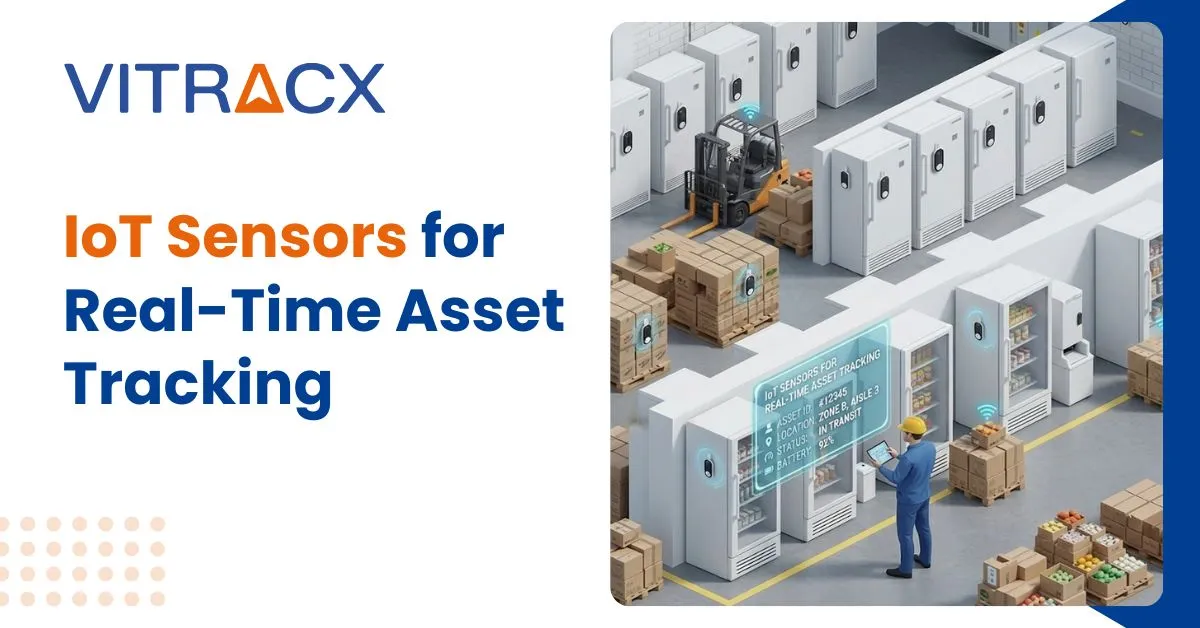
IoT Sensors for Real-Time Asset Tracking

As businesses accelerate digital transformation, the adoption of IoT sensors for real-time asset tracking is increasing rapidly across multiple sectors. Organizations managing high-value equipment, inventory, and mobile assets are leveraging IoT technology to gain live visibility, reduce losses, and improve operational efficiency—especially across large and distributed facilities in India.

With IoT-based asset tracking solutions, companies can monitor asset location, movement, and condition continuously, enabling smarter decisions and better control over operations.

What Are IoT Sensors for Real-Time Asset Tracking?

IoT sensors are intelligent devices designed to collect real-time data such as location, temperature, humidity, motion, and usage. When deployed as part of an IoT asset tracking system, these sensors transmit data through wireless technologies like BLE, LoRaWAN, RFID, Wi-Fi, or cellular networks.

Businesses across manufacturing, logistics, healthcare, and warehousing in India use IoT sensors to maintain live asset visibility across indoor and outdoor environments without manual intervention.

How IoT Sensors Enable Real-Time Asset Tracking?

IoT sensors continuously capture data from assets and transmit it to a centralized monitoring platform where it is processed, analyzed, and visualized.

Core Components of an IoT Asset Tracking System

  • IoT sensors attached to assets
  • Gateways or receivers
  • Asset tracking software dashboards
  • Automated alerts and analytics

This setup allows organizations to implement real-time asset tracking using IoT, ensuring immediate notifications for asset movement, misuse, or environmental changes across facilities in India.

Benefits of IoT Sensors for Asset Tracking

1. Real-Time Asset Visibility

IoT sensors provide continuous visibility into asset location and status, enabling teams to instantly locate equipment, tools, and inventory across operations in India.

2. Reduced Asset Loss and Theft

With automated alerts and location monitoring, IoT asset tracking significantly reduces asset misplacement, theft, and unauthorized movement—especially in large warehouses and industrial sites in India.

3. Improved Operational Efficiency

Manual asset tracking leads to delays and errors. IoT-based asset tracking systems automate the entire process, reducing downtime and improving workflow efficiency for manufacturing and logistics operations in India.

4. Condition Monitoring and Compliance

IoT sensors monitor environmental parameters such as temperature, humidity, vibration, and pressure. This is critical for pharmaceutical, healthcare, and cold chain asset tracking applications commonly required across India.

5. Optimized Asset Utilization

Real-time and historical data from IoT sensors help businesses understand asset usage patterns, eliminate underutilization, and make informed procurement and maintenance decisions across facilities in India.

Looking for IoT sensors for real-time asset tracking? Contact us today to implement smart, scalable IoT asset tracking solutions for your business.

Industries Using IoT Sensors for Asset Tracking

Manufacturing

Manufacturers track machines, tools, work-in-progress items, and finished goods to improve production flow and support smart manufacturing initiatives across India.

Warehousing and Logistics

IoT sensors enable real-time tracking of pallets, forklifts, containers, and shipments, helping logistics operators manage large distribution networks throughout India.

Healthcare

Hospitals and labs track medical equipment, devices, and critical assets using IoT sensors to improve availability, compliance, and patient care across healthcare facilities in India.

Retail and Supply Chain

Retailers use IoT asset tracking to monitor inventory movement, reduce shrinkage, and enhance supply chain visibility across multiple locations in India.

Oil, Gas, and Heavy Industries

IoT sensors support long-range tracking of high-value equipment deployed across expansive industrial sites commonly found in India.

Types of IoT Sensors Used for Asset Tracking

  • Location sensors (BLE, UWB, GPS)
  • Environmental sensors (temperature, humidity)
  • Motion and vibration sensors
  • Proximity sensors
  • Battery and power monitoring sensors

These sensor types support both indoor and outdoor asset tracking systems using IoT, making them suitable for diverse operational environments across India.

IoT Sensors vs Traditional Asset Tracking Methods

Feature Traditional Tracking IoT Asset Tracking
Visibility Periodic Real-time
Accuracy Limited High
Alerts Manual Automated
Scalability Low High
Analytics Minimal Advanced

Organizations adopting IoT-based tracking solutions in India gain significantly higher accuracy, scalability, and control.

Role of IoT Sensors in Smart Manufacturing

IoT sensors play a vital role in enabling smart manufacturing by connecting physical assets to digital platforms. Continuous data flow supports automation, predictive maintenance, and intelligent decision-making.

With IoT sensor-based asset tracking, factories improve productivity, enhance safety, and gain real-time operational control—key requirements for modern manufacturing environments in India.

How to Choose the Right IoT Sensors for Asset Tracking?

When selecting IoT sensors, businesses should evaluate:

  • Indoor vs outdoor tracking needs
  • Required accuracy and coverage
  • Battery life and maintenance
  • Scalability across locations
  • Integration with RTLS, ERP, or WMS
  • Data security and reliability

A well-planned deployment ensures long-term ROI and operational success for organizations operating across India.

Frequently Asked Questions

IoT sensors are used to track the real-time location, movement, and condition of assets by collecting and transmitting live data to a centralized system. They help businesses monitor assets accurately across facilities and locations in India.

IoT sensors collect data such as location, temperature, motion, or usage and transmit it through wireless networks to tracking software. This enables continuous, real-time asset visibility without manual intervention.

Industries such as manufacturing, warehousing, logistics, healthcare, retail, oil & gas, and supply chain operations widely use IoT sensors for asset tracking across large facilities and multi-location operations in India.

IoT sensors can track machinery, tools, pallets, containers, vehicles, medical equipment, IT assets, inventory, and temperature-sensitive goods across indoor and outdoor environments.

Yes. IoT sensors provide continuous monitoring and automated alerts for unauthorized movement, helping businesses reduce asset loss, theft, and misplacement across warehouses and industrial sites in India.

Conclusion

IoT sensors for real-time asset tracking are transforming how businesses manage physical assets. By delivering continuous visibility, automated alerts, and actionable insights, IoT-based asset tracking systems help organizations reduce costs, improve efficiency, and support digital transformation across industries in India.

As businesses move toward smart operations and Industry 4.0 adoption, IoT sensors remain a critical technology for future-ready asset management.

Back To Top