Skip to content
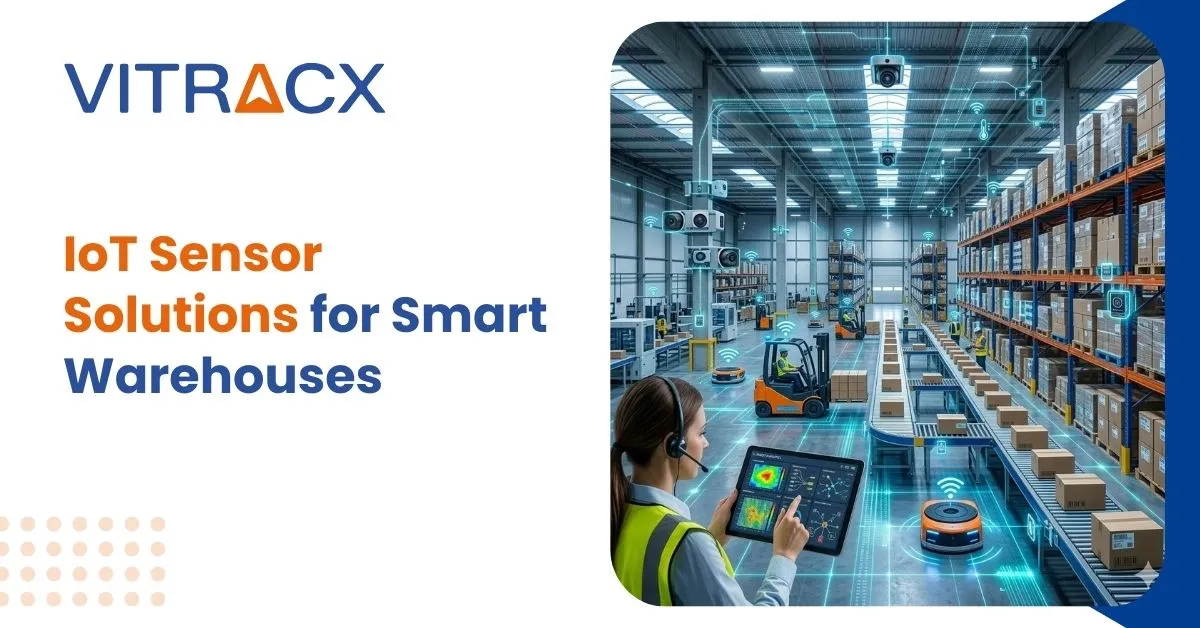
IoT Sensor Solutions for Smart Warehouses

The rapid growth of e-commerce, logistics, and global supply chains has increased the demand for smart warehouse technologies that improve efficiency, visibility, and automation. Traditional warehouse management methods often rely on manual tracking and delayed updates, which can lead to inventory errors, operational delays, and reduced productivity.

This is where IoT sensor solutions for smart warehouses play a transformative role. By enabling real-time monitoring, automated alerts, and data-driven decision-making, IoT sensors help warehouses operate more intelligently and efficiently.

In this blog, we explore how IoT sensor solutions improve warehouse automation, inventory visibility, and operational efficiency, and why they are becoming essential for modern supply chain management.

What Are IoT Sensor Solutions?

IoT sensor solutions use connected sensors and devices to collect and transmit real-time data from physical environments. These sensors monitor conditions such as location, temperature, humidity, motion, vibration, and equipment performance.

In warehouse environments, IoT sensors are used to monitor:

  • Inventory movement
  • Equipment performance
  • Environmental conditions
  • Worker safety
  • Energy consumption

The collected data is transmitted to cloud platforms or warehouse management systems, enabling real-time visibility and automated decision-making.

Why Smart Warehouses Need IoT Sensor Solutions?

Modern warehouses handle large volumes of inventory and complex operations. Without real-time monitoring, it becomes difficult to maintain efficiency and accuracy.

Common Warehouse Challenges

  • Misplaced inventory
  • Limited asset visibility
  • Delayed stock updates
  • Equipment downtime
  • Safety risks

IoT sensor solutions address these challenges by providing real-time monitoring and automation, helping warehouses operate more efficiently.

How IoT Sensor Solutions Work in Smart Warehouses?

IoT sensor solutions operate through a connected ecosystem of devices and software platforms.

Key Components of IoT Sensor Systems

  • IoT Sensors – Capture data from warehouse assets and environment
  • Gateways – Transmit data to cloud platforms
  • IoT Platforms – Process and analyze sensor data
  • Analytics Dashboards – Provide actionable insights

These components work together to create a smart warehouse monitoring system that improves operational visibility.

Want to build a smarter warehouse with real-time monitoring? Contact us today to implement IoT sensor solutions for your warehouse operations.

Benefits of IoT Sensor Solutions for Smart Warehouses

1. Real-Time Inventory Monitoring

IoT sensors enable real-time inventory tracking, allowing warehouse teams to instantly locate items and monitor stock levels.

Benefits include:

  • Reduced inventory errors
  • Faster order fulfillment
  • Improved stock accuracy
  • Better warehouse visibility

2. Improved Equipment Monitoring

Warehouse equipment such as forklifts, conveyors, and automated systems can be monitored using IoT sensors.

Benefits include:

  • Predictive maintenance
  • Reduced downtime
  • Improved equipment utilization
  • Lower maintenance costs

3. Environmental Monitoring

Many warehouses store sensitive products that require controlled environmental conditions.

IoT sensors can monitor:

  • Temperature
  • Humidity
  • Air quality
  • Cold storage conditions

This helps ensure product quality and regulatory compliance.

4. Worker Safety Monitoring

IoT sensors improve workplace safety in warehouses by monitoring worker movement and detecting unsafe conditions.

Examples include:

  • Proximity alerts between forklifts and workers
  • Hazard detection
  • Emergency alerts

These systems help reduce accidents and improve workplace safety.

5. Energy Efficiency Optimization

IoT sensors can track energy usage across warehouse operations.

Benefits include:

  • Reduced energy costs
  • Efficient lighting control
  • Smart HVAC monitoring
  • Sustainable warehouse operations

IoT Sensor Use Cases in Smart Warehouses

IoT sensor solutions support multiple warehouse applications.

Use Case Challenge IoT Sensor Benefit
Inventory Monitoring Stock discrepancies Real-time tracking
Equipment Monitoring Unexpected downtime Predictive maintenance
Cold Storage Monitoring Temperature variation Automated alerts
Worker Safety Workplace hazards Real-time safety monitoring
Energy Monitoring High operational costs Energy optimization

IoT Sensors vs Traditional Warehouse Monitoring

Feature Traditional Monitoring IoT Sensor Solutions
Data Updates Manual Real-time
Accuracy Moderate High
Automation Limited Advanced
Monitoring Periodic Continuous
Decision Making Reactive Data-driven

IoT sensor solutions provide continuous monitoring and automated insights, making warehouses more efficient and intelligent.

Implementing IoT Sensor Solutions in Warehouses

To successfully implement IoT monitoring solutions, warehouses should follow a structured approach.

Implementation Steps

  1. Identify operational challenges
  2. Define monitoring objectives
  3. Select appropriate IoT sensors
  4. Deploy sensors and gateways
  5. Integrate with warehouse management systems
  6. Monitor and optimize performance

A strategic implementation ensures maximum ROI and operational improvements.

The Future of Smart Warehouses with IoT

As supply chains continue to evolve, IoT sensor technology will play a key role in warehouse automation. Integration with technologies such as AI, robotics, and RTLS solutions will enable smarter, more efficient warehouse ecosystems.

Future warehouses will benefit from:

  • Fully automated inventory tracking
  • Predictive operational insights
  • Smart asset monitoring
  • Real-time supply chain visibility

These innovations will drive the next generation of smart warehouses and digital logistics operations.

Frequently Asked Questions

IoT sensor solutions use connected sensors to monitor warehouse assets, inventory, environmental conditions, and equipment in real time.

IoT sensors provide real-time data, automate monitoring, reduce manual processes, and improve inventory accuracy.

Common sensors include temperature sensors, motion sensors, proximity sensors, vibration sensors, and environmental monitoring sensors.

Yes, IoT solutions are scalable and can be implemented in warehouses of all sizes.

Yes, IoT sensors can integrate with WMS, ERP, and analytics platforms to provide real-time operational insights.

Conclusion

IoT sensor solutions for smart warehouses are transforming warehouse operations by enabling real-time monitoring, improved inventory accuracy, enhanced safety, and optimized energy consumption.

By implementing IoT monitoring systems, businesses can reduce operational inefficiencies, improve productivity, and achieve better supply chain visibility. As warehouses continue to adopt digital technologies, IoT sensors will become a critical component of smart warehouse automation and modern logistics operations.

Back To Top